
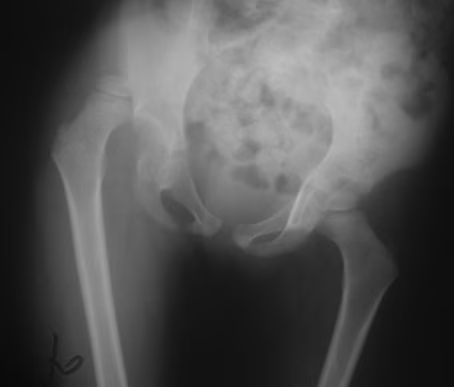
Epidemiology
Rare
Posterior hip dislocation most common
Older pediatric patients - high energy trauma
Patients < 5 - low energy falls, due to hyperlaxity
Baumann et al J Pediatr Orthop 2024
- systematic review of 575 pediatric traumatic hip dislocations
- 86% posterior hip dislocation
- 85% treated with closed reduction
Associated Injuries
Transphyseal femoral head fracture - Salter-Harris type I
Posterior column acetabular fractures
Posterior labral tears
Chondral / osteochondral injury to femoral head / acetabulum
Thanacharoenpanich et al J Pediatr Orthop 2020
- 27 pediatric hip dislocations with MRI post reduction
- femoral head injuries 63%
- posterior labral entrapments 23%
- posterior labral tears 63%
- posterior wall fractures 56%
- fracture of the posterior unossified part of acetabulum 15%
- ligamentum teres injuries 30%
Complications
Recurrent dislocation / subluxation
Avascular necrosis
Growth plate arrest / leg length discrepancy
Avascular necrosis
Braun et al Eur J Trauma Emerg Surg 2023
- 76 pediatric hip dislocations
- two peaks in age
- age 4 - 8 girls with low energy injury
- age 11 - 15 boys with high energy injury
- majority treated with closed reduction
- AVN 16%
Baumann et al J Pediatr Orthop 2024
- systematic review of 575 pediatric traumatic hip dislocations
- AVN 16%
Transphyseal fracture dislocations
- systematic review of 35 pediatric hip fracture dislocations
- aged 10 - 16
- 29 posterior, 4 anterior
- 97% treated with open reduction
- incidence of AVN 89% with transphyseal fracture dislocation
- recurrent head subluxation 6% (2/35)
- physeal closure 3% (1/35)
Closed Reduction
Conscious sedation
- reduce
- assess concentric reduction
- spica / traction
Xray - ensure concentric reduction
CT / MRI
Thanacharoenpanich et al J Pediatr Orthop 2020
- 27 pediatric hip dislocation
- CT versus MRI
- MRI able to detect entrapped posterior labrum and acetabulum cartilage
- recommend MRI
Open Reduction
Indication
Failed closed reduction
Non concentric reduction
Displaced femoral epiphysis
Loose bodies / fractures / labral tears
Non concentric reduction
Novais et al J Pediatr Orthop 2016
- 8 patients with non concentric reduction after hip dislocation
- all patients had posterior labral tears
- 3 had fracture of the cartilaginous posterior wall
- 5 had femoral head chondral fractures
Podeszwa et al J Pediatr Orthop 2016
- 11 patients with non concentric reduction after hip dislocation
- 8/11 labral tear
- 5/11 femoral cartilage injury
- 4/11 acetabular rim fracture
- 3/11 acetabular cartilage delamination
- 2/11 loose body
- 1/11 femoral head osteochondral fracture
Technique
Options
- anterior approach
- lateral approach with greater trochanter osteotomy
- posterior approach
AO surgery foundation posterior approach with trochanteric flip osteotomy
Femoral epiphysis fracture
- reduce eiphysis
- long screw crossing physis