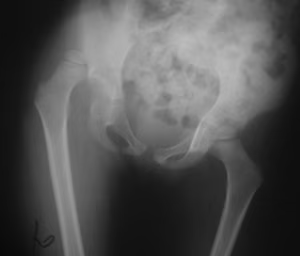
Traumatic hip dislocations
Incidence
Very rare
Associated Injuries
SH type 1 femoral epiphysis most common
Management
Closed Reduction
Assess concentric reduction
Assess stability
Apply spica / traction for 2 weeks

Very rare
SH type 1 femoral epiphysis most common
Assess concentric reduction
Assess stability
Apply spica / traction for 2 weeks
Anterior
Anterolateral
Posterior
Indications
- shoulder stabilization
- arthroplasty
- fracture fixation
Approach
Position
- beach chair
- upper body elevated 30- 40o / reduces venous pressure and bleeding
5-15% of posterior dislocations
Posterior hip dislocation
Type I - head fracture below fovea
Undisplaced
- non operative
Displaced
- excise fragment if small
- ORIF fragment if large (can contribute to instability)
Repetitive plantar flexion
- soccer players, ballet dancers
Os trigonum
FHL stenosing tenosynovitis
Soft tissue mass
Secondary centre of ossification of talus
- lateral to groove for FHL
- 2-7% of normal feet
- impinges against plafond with forced PF
Parosteal OS
- bone is not continuous with cortex in MO
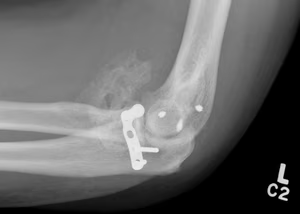
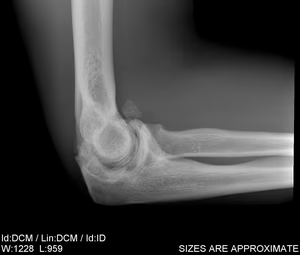
3% incidence in elbow joint trauma to some degree
Average age 6 years
20% distal humeral fracture
- second most common elbow fracture after supracondylar
Pull Off
- more common
- fracture begins posterolateral metaphysis
- LCL, ECRL & ECRB attached to fragment
Push off
- varus force to extended EJ