
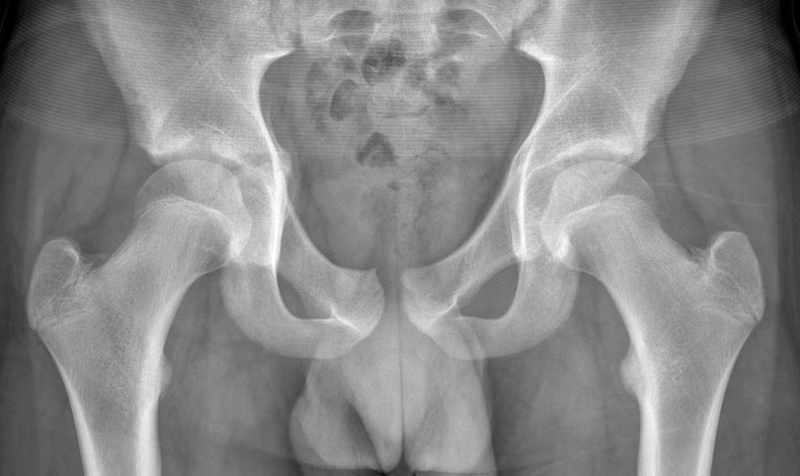
Anatomy
Bones more elastic and malleable - absorb much more energy
Very thick periosteum - can be periosteal sleeve fracture
Ossification
Triradiate cartilage fuses 13-16
Iliac / Ilium / ASIS apophysis - appear as teenager and fuse a couple of years later
Classification Key & Conwell 1951
| No break in continuity of pelvic ring | Single break in ring | Double break in ring | Fracture of acetabulum |
|---|---|---|---|
|
A. Avulsion fractures 1. ASIS 2. AIIS 3. Ischial Tuberosity B. Fracture of pubis or ileum C. Fractured wing of ileum D. Fracture sacrum or coccyx |
A. Fracture of 2 ipsilateral pubic rami B. Fracture near or subluxation of symphysis pubis C. Fracture near or subluxation of SIJ |
A. Double vertical fractures or dislocation of pubis (straddle fracture) B. Double vertical fractures or dislocation (Malgaigne fracture) C. Severe multiple fractures |
A. Small fragment associated with dislocation of hip B. Linear fracture associated with non-displaced pelvic fracture C. Linear fracture associated with hip joint instability D. Fracture secondary to central dislocation |
Associated injuries
Mortality rate around 10%, usually from head injury
| Local | Distant |
|---|---|
|
Haematuria 30% Urological / bladder 10% Abdominal injury 11% Perineal or gluteal lacerations 7% |
Head 61% Chest 9% Upper extremity fracture 17% Lower Extremity fracture 17% |
Examination
EMST / ATLS
Vaginal and rectal examination
Neurological and vascular examination
Management
Apophyseal avulsion fractures
www.boneschool.com/apophyseal-avulsion-fractures
Pubic fractures
Exclude genito-urinary injury
Unilateral Fractures
- stable
- weight bear as tolerated
- usually 3-4 weeks
Bilateral Fractures
May be associated with posterior ring or sacral fracture
- potentially unstable
- usually doesn't need ORIF
Pubic symphysis diastasis
Assess
- urological injury
- posterior ring injury
Treatment
- heals with periosteal sleeve
- if wide should close with external fixator
- if remains widened child walks with external rotation deformity
Vertical Shear Fractures
Unstable
- associated visceral injuries
- blood loss is substantial
- is rare for child to die of blood loss from pelvis compared with adults
Management
- 6 weeks of skeletal traction
- rarely need external fixator
Complication
- LLD usually < 2 cm
- contralateral hemi-epiphysiodesis
Acetabular Fractures
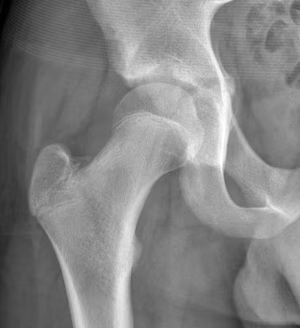
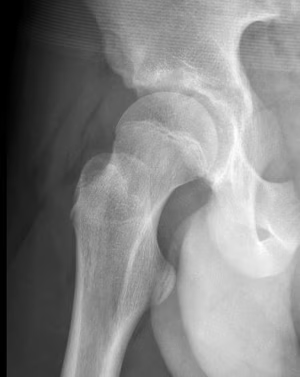
Triradiate fractures
- uncommon
- usually from extension of adjacent rami and iliac fracture
- usually stable
Complication
- child < 10
- early closure triradiate cartilage
- acetabular dysplasia
Management
Tri-radiate fracture
- skeletal traction
- CT
- if severely displaced fragment ORIF with smooth pins
Physeal bar across triradiate cartilage
- follow up all displaced & non displaced
- consider bony bidge excision and fat graft