
avascular necrosis
Kohler's disease
Definition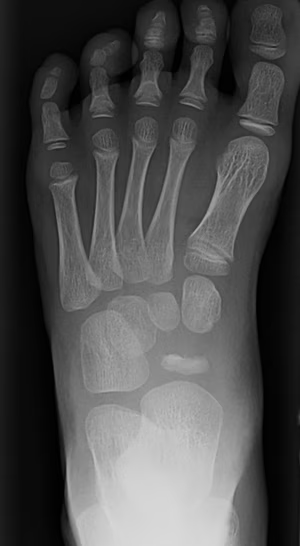
Osteonecrosis of the navicular
Epidemiology
Present at age 4-6 years
- same as Perthes disease
M:F 5:1
Bilateral in 20%
Aetiology
Repetitive trauma to maturing ossific nucleus
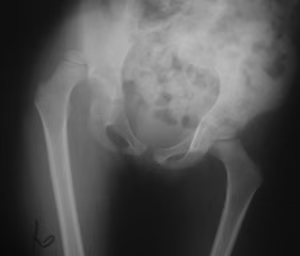
Traumatic hip dislocations
Incidence
Very rare
Associated Injuries
SH type 1 femoral epiphysis most common
Management
Closed Reduction
Assess concentric reduction
Assess stability
Apply spica / traction for 2 weeks
Management
Management Summary
Stage 0
Natural history mixed
- depends on size of lesion and diagnosis
- treat if becomes asymptomatic
- may benefit from bisphosphonates
Stage 1 / Normal X-ray, abnormal MRI
Forage: 80% G/E
Bisphosphonates
Stage 2 / Abnormal X-ray with cysts and sclerosis
A: As for Stage I
Background
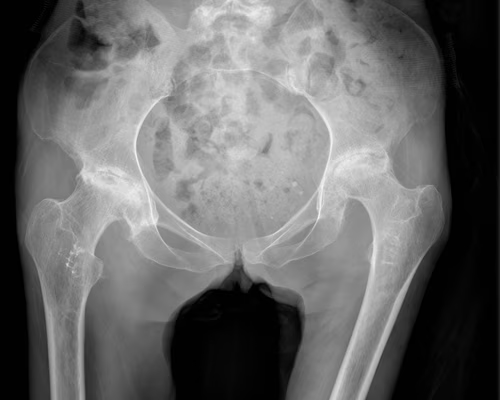
Definition
Non-traumatic or traumatic condition of femoral head with bone death
Epidemiology
20 - 50 yo (average 38)
- M: F 4:1
NHx
70-80% with AVN will progress within 1 year
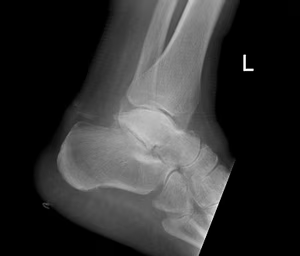
Talar neck complications
AVN
Largely related to degree of displacement
Incidence
Hawkins Type I
- 0% to 13%
Hawkins Type II
- 20% to 50%
- usually only patchy and not a problem (rarely collapses)
Fracture
Epidemiology
Young men
Aetiology
FOOSH
- axial load, dorsiflexion and radial deviation
DISI occurs in ulna deviation
Herbert Classification
Type A Stable acute fracture
A1 Tubercle
Avascular Necrosis
Diagnosis
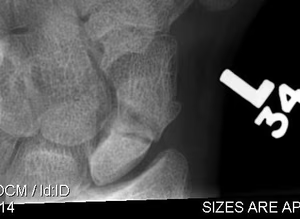
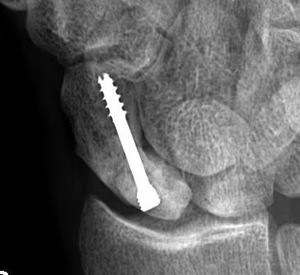
Xray
- sclerosis
CT
Kienbock's disease
Definition
Avascular necrosis & subsequent disintegration of lunate
Aetiology
50-75% history of trauma
Occasionally seen in sickle cell / steroid use
Pathogenesis
Vascular Theory
Trauma disrupting vascularity
- single incident with disruption of blood supply