
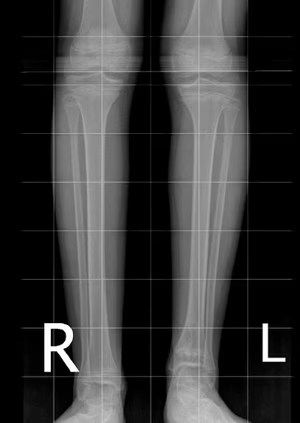
Treatment guidelines by projected LLD
Options
Orthotics
Physeal bar resection - removal of central physeal bar
Ephysiodesis - slow or stop growth in long leg
Leg lengthening
| 0 - 2 cm | 2 - 5cm | 6 - 15 cm | > 15 cm |
|---|---|---|---|
| Heel raise |
Heel raise + sole raise
Epiphysiodesis contralateral |
Lengthening ipsilateral
Epiphysiodesis contralateral
Guided growth |
Amputation |
Orthotics
Options
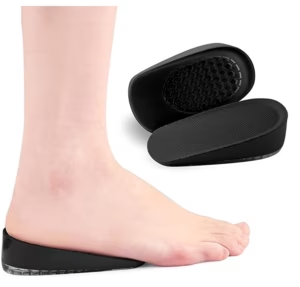
Heel raise
- simple insert placed inside shoe
- max 2 cm
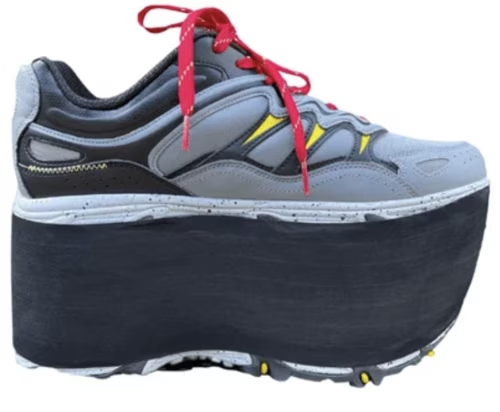
Sole raise / shoe lift
- custom made external orthotic / thicken heel
- max 5 cm
5 - 12 cm
- subtalar joint unstable
- requires steel bar reinforcement
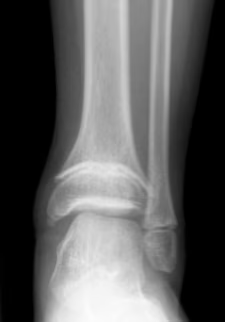
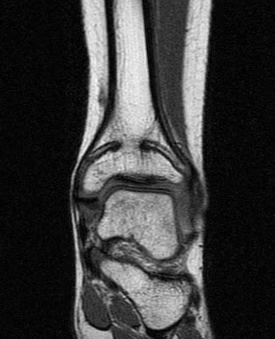
Physeal bar resection
Definition
Removal of partial growth plate arrest to restore normal growth
- central bars: cause LLD
- peripheral bars: angular deformity
Indication
< 50% growth plate bar
> 2 years growth
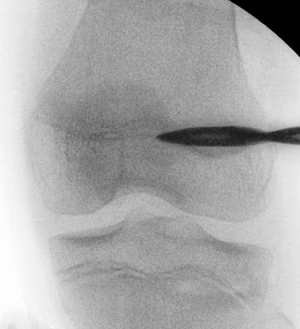
Technique
Arthroscopic assist technique PDF
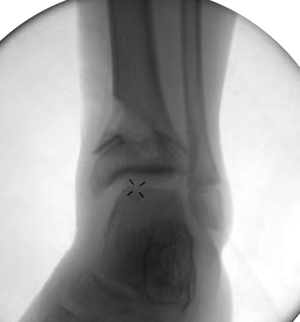
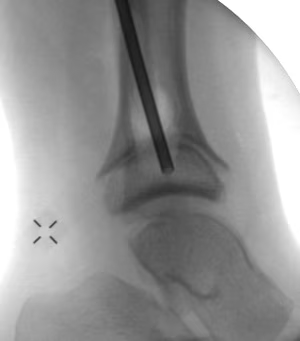
Approach
- peripheral bar - direct approach
- central bar - metaphyseal window
- excision of bar with burr preserving normal physis
- fat graft interposition
Results
Marsh et al J Pediatr Orthop 2006
- 32 cases of central physeal bar
- excised with arthroscopic assistance
- adequate longitudinal growth in 70%
Epiphysiodesis
Definition
Slow or stop growth in long leg to match short leg
Indication
LLD 2 - 5 cm
Options
Permanent epiphysiodesis
- remove growth plate to permanently stop growth
- need to carefully calculate final LLD
- need to be close to skeletally mature
Temporary epiphysiodesis
- Guided growth - temporary growth plate arrest using 8 plates
- can perform at younger age
- can repeat if needed
Permanent epiphysiodesis
Options
Phimester technique - open bone block excision, flip, reinsert bone block
Percutaneous technique - minimally invasive drilling / curette under fluoroscopy
Technique
Estimate LLD at maturity
- Green and Anderson chart
- Moseley straight line graph
- Paley multiplier method
www.boneschool.com/pediatrics/LLD-background
Determine timing of epiphysiodesis
- LLD at skeletal maturity
- girls stop growing at 14 / boys stop growing at 16
- distal femur 9 mm / year
- proximal femur 3 mm / year
- proximal tibia 6 mm / year
- distal tibia 3 mm / year
Permanent epiphysiodesis
- fluoroscopy
- medial and lateral approaches
- drill / currette growth plate
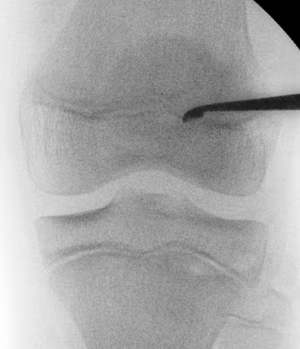
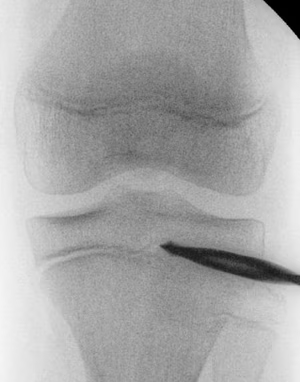
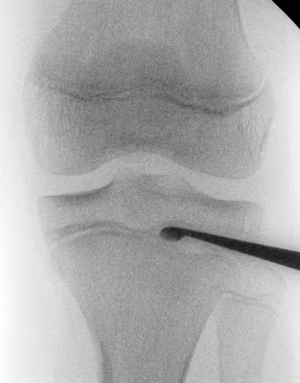
Results
Tirta et al J Pediatr Orthop B 2024
- systematic review of Phemister technique versus percutaneous eiphysiodesis
- 3000 cases
- overall success rate 74%
- severe complications: Phemister 10%, percutaneous epiphysiodesis 5%
Temporary epiphysiodesis
Concept
Temporary cessation of growth in long leg
- reduced need to calculate LLD at skeletal maturity
- remove after 2 years to prevent permanent growth plate arrest
- can repeat
Options
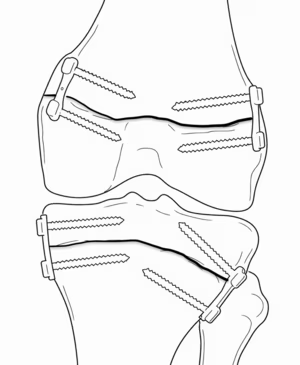
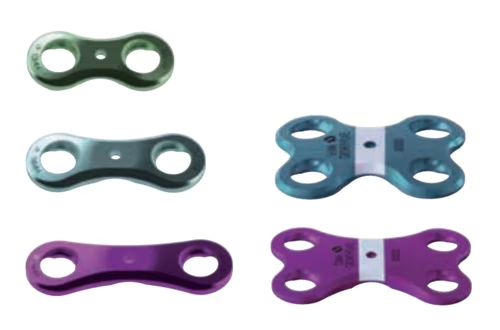
8 plates / tension band plates
Percutaneous transphyseal screws
Blounts staples
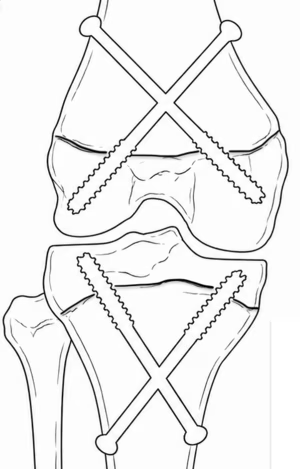
Results
Screws versus plates versus staples
- systematic review of staples v screws v tension band plates for LLD
- 44 studies and 2000 patients
- screws: success rate 76%, severe complications 7%, angular deformity 4%
- tension band plates: success rate 67%, severe complications 17%, angular deformity 10%
- staples: success rate 51%, severe complications 16%, angular deformity 17%
Cheng et al J Child Orthop 2021
- 53 patients with LLD treated with temporary epiphysiodesis
- percutaneous transphyseal screws versus 8 plates
- increased angular deformity with 8 plates
Angular deformity - sagittal / coronal plane
Furuhashi et al J Orthop Sci 2020
- 27 patients mean age 10 with LLD
- temporary epiphysiodesis of distal femur
- anterior placement of implants associated with extension deformity
- implants need to be in center of growth plate
Alteration proximal tibial morphology
Starobrat et al J Clin Med 2024
- 60 patients with LLD treated with temporary epiphysiodesis
- compared 18 months v 30 months v 44 months of treatment
- treatment of > 40 months affected shape of proximal tibia
Rebound growth acceleration
Technique eight plates
Eight plate surgical technique PDF
Arthroscopy techniques guided growth PDF
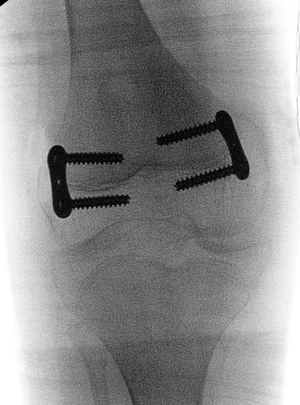
Medial and lateral approaches
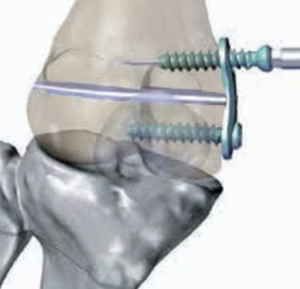
- Eight plates centered on growth plate with K wire into physis
- screws above and below physis
- screws parallel or divergent
- femur +/- tibia +/- both
Leg Lengthening
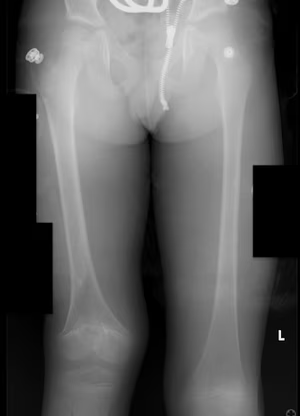
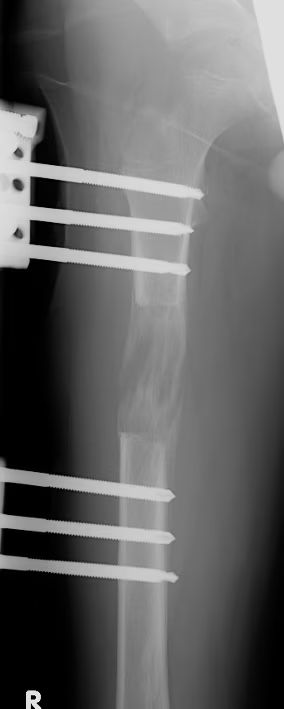
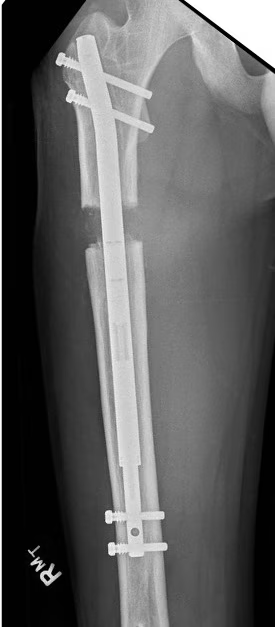
Distraction osteogenesis
1. Osteotomy - low energy corticotomy, preserve periosteum
2. Latency period - allow callous to form, 1 week
3. Distraction period callotasis - incremental callous distraction after latency period, 1 mm a day
4. Consolidation period - 1 month per cm
| Indication | Advantage | Disadvantage |
|---|---|---|
|
LLD 5 - 15 cm
5 cm femur / 5 cm tibia
Any more risks nerve injury |
Maintains height |
Steep learning curve
Long process
High complication rate |
Options
External fixation
- monolateral femur / circular frame tibia
- external fixator + flexible intramedullary nail
- plate assisted - lengthen with external fixator, then apply plate
Self lengthening nail - growth plates fused
Corticotomy
Drill-holes & closed osteoclasis / Di Bastiani
- percutaneous skin incision
- multiple drill holes first to weaken bone
- osteotome to complete
- apply force to complete fracture
Tibia
- incision lateral crest tibia, elevate periosteum lateral tibia
- incision medial border tibia, elevate periosteum medial tibia
- pass artery clip between periosteum and bone to pass gigli saw
External fixation
Monolateral external distractor femur
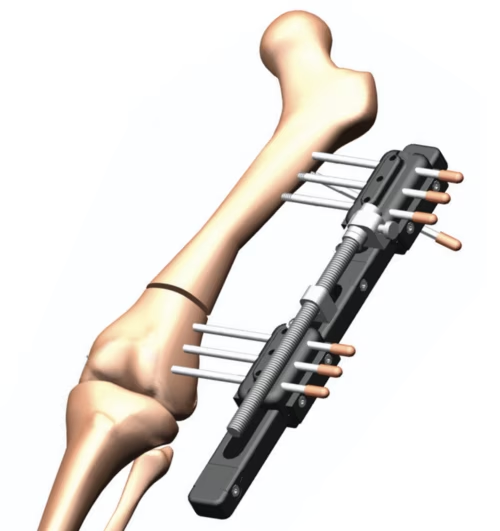
Smith and Nephew Modular Rail External fixator
Circular external fixation / Ilizarov / Taylor spatial frame
- 213 LLD correction with Taylor spatial frame
- mean age 14
- mean lengthening 4 cm
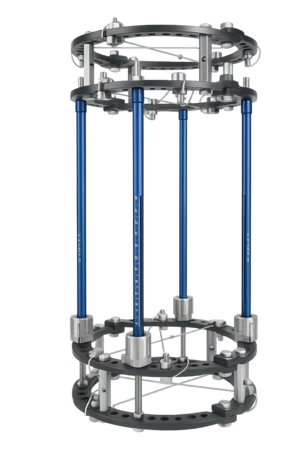
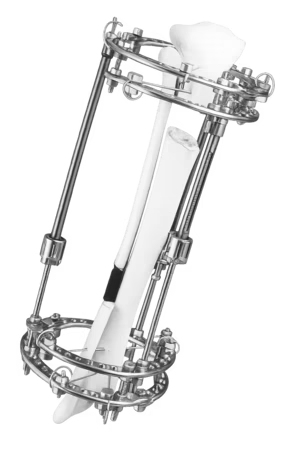
Smith & Nephew Ilizarov External Fixation
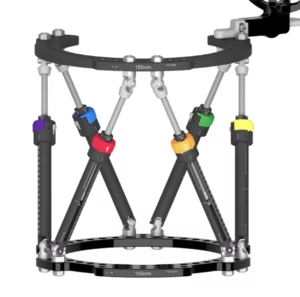
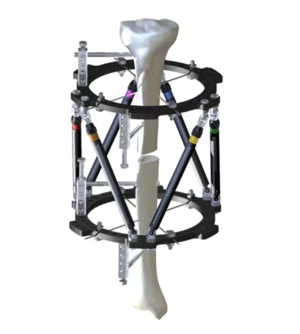
Smith & Nephew Taylor Spatial Frame
External fixation over flexible nails
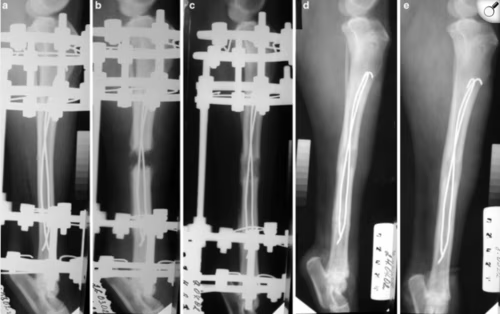
From: Popkov et al J Child Orthop 2016 technique PDF
Popkov et al J Pediatr Orthop 2021
- 70 lengthenings with external fixation over nail
- mean age 13
- 19 femoral, 51 tibial
- 4 cases of fracture at lengthening site
Self lengthening nails
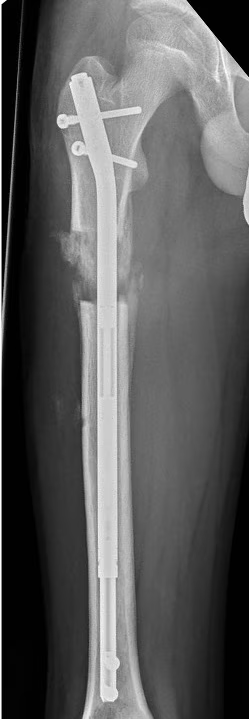
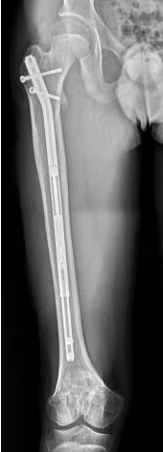
Concept
Extenally controlled, motorized, magnet driven
Results
Iliadis et al J Pediatr Orthop 2021
- 50 leg lengthening (43 femoral / 7 tibial) using IMN
- mean age 15
- mean lengthening 4.7 cm
- nail accuracy 96%
- no significant complications
- 314 leg lengthening with FITBONE and PRECICE nails
- 80% in femur
- 53% complications
- device: distraction mechanism - runaway nails, locked nails
- joint: contracture
- bone: premature consolidation, delayed union, deformity, fracture
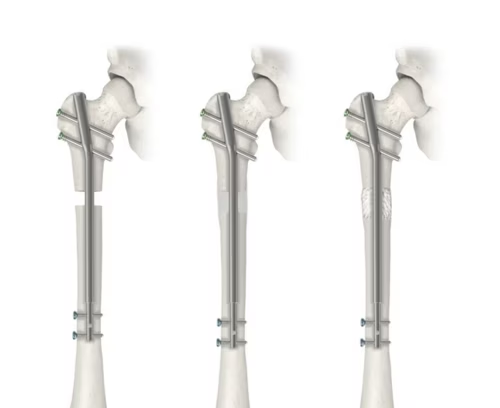
PRECICE intra-medullary leg lengthening system
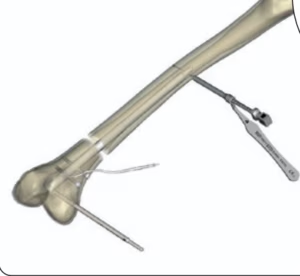
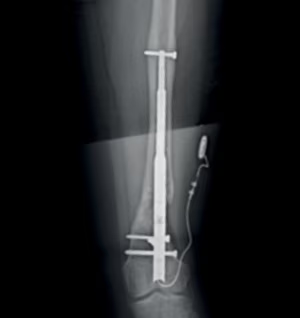
FITBONE femoral lengthening system PDF
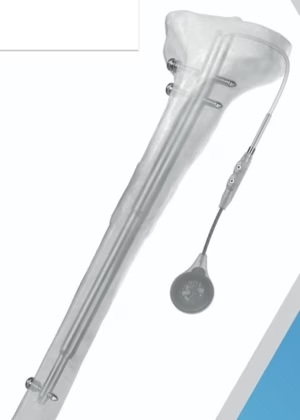
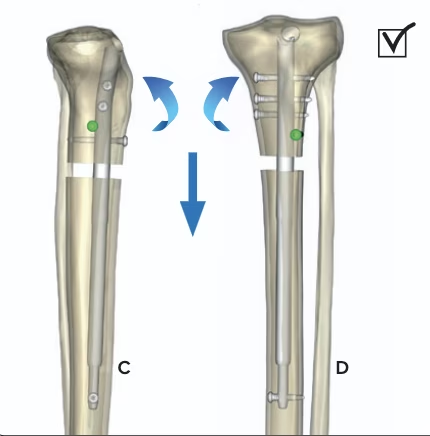
FITBONE tibial lengthening system PDF