
Definition
Dysproportionate dwarfism
- present at birth with short limbs and normal trunk
- rhizomelic - dysproportionate shortening of proximal segments of limbs (femur / humerus)
Etiology
Most common form of skeletal dysplasia
- 80% from spontaneous mutation
- Autosomal dominant
- 4 / 100,000
Point mutation of FGF Receptor 3
- FGF receptor overactive
- inhibits endochondral ossification at the growth plate
- normal intramembraneous ossification
Lower Limbs
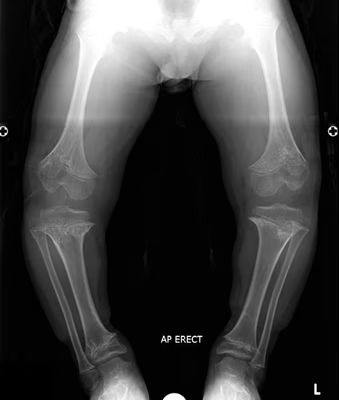
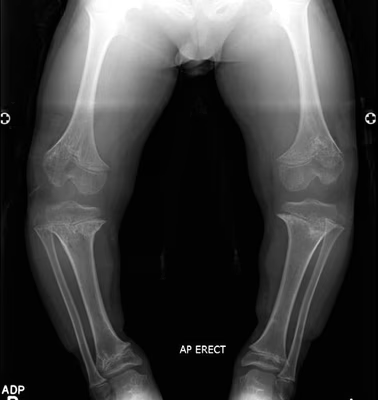
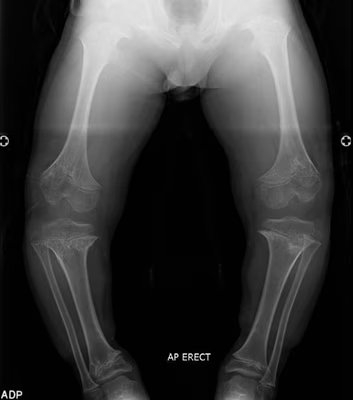
Knees: bowing with genu varum
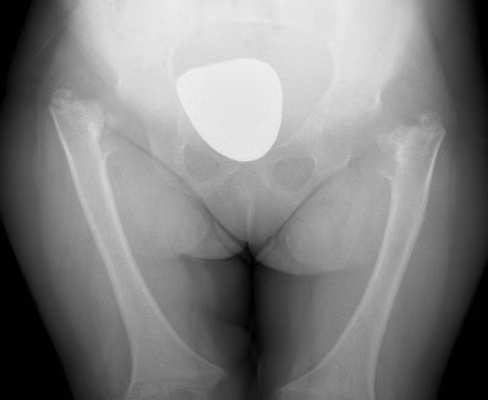
Hips: coxa vara with short femoral necks, horizontal acetabular roof, fixed flexion contractures
Pelvis: square iliac bones with champagne-glass pelvic cavity (pelvis is wider than it is deep)
Thoracolumbar spine
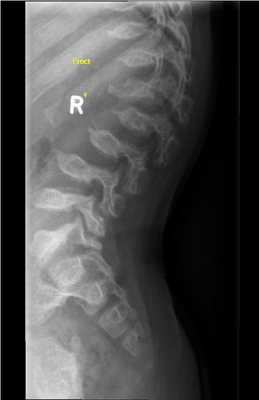
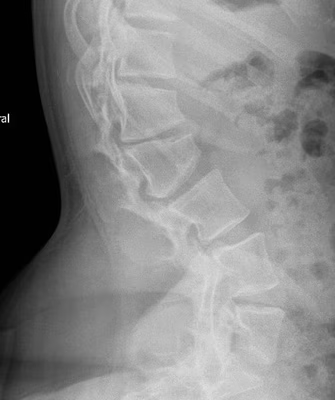
Platyspondyly - bullet shape vertebrae and posterior scalloping of vertebral bodies
Increased lumbar lordosis
Thoracolumbar kyphosis
Spinal canal stenosis - decreased inter-pedicular distance and short pedicles
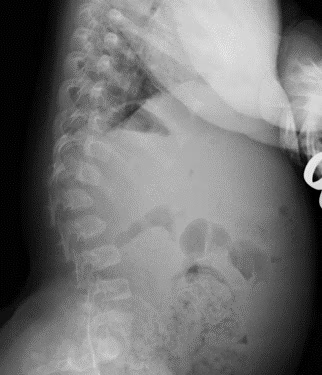
Platyspondyly Thoracolumbar kyphosis
Cervical spine
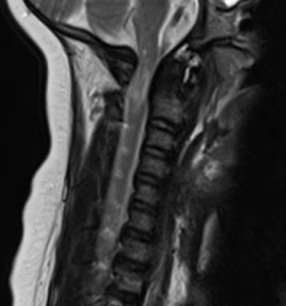
Foramen magnum stenosis
- base of skull forms by endochondral ossification
- often presents with snoring
- may have symptoms myelopathy
- can cause apnea and sudden death
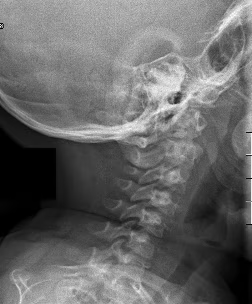
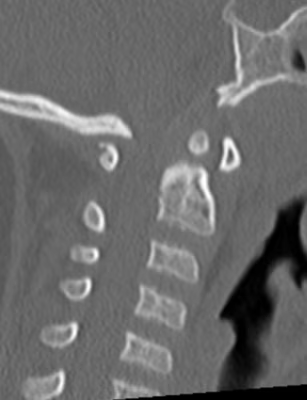
Foramen magnum stenosis with spinal cords changes consistent with myelopathy
Upper Limbs
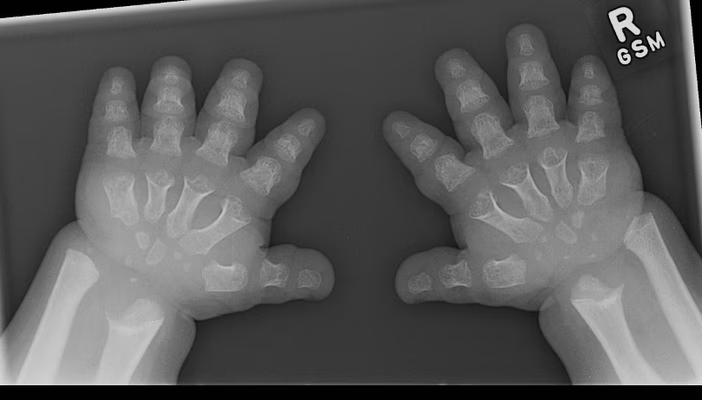
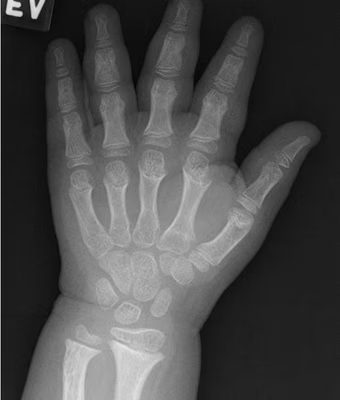
Trident hand (50%) - persistent space between middle & ring in extension with short fingers
Short humerus - may rarely need humerus lengthening for toileting
Elbow cubitus varus, bowed forearm and radial head dislocation
Nonoperative management
Options
Growth hormone
Vosoritide
Recombinant Growth Hormone
Harada et al Eur J Pediatr 2017
- 22 patients with achondroplasia treated with GH for mean of 10 years
- followed to adulthood
- mean increase in height 3.5 cm in males and 3 cm in females
Vosoritide
Mechanism
Vosoritide activates the NPR-B receptor to inhibit the overactive FGFR3 signaling pathway
- increases height
- once daily subcutaneous injection beginning age 4 months
Results
Alfaraj et al Eur J Pediatr 2026
- systematic review of Vosoritide in achondroplasia
- associated with increased growth velocity and height
- most common side effect injection site reactions and GI symptoms
Operative management
Issues
Foramen magnum stenosis
Spinal stenosis
Thoracolumbar kyphosis
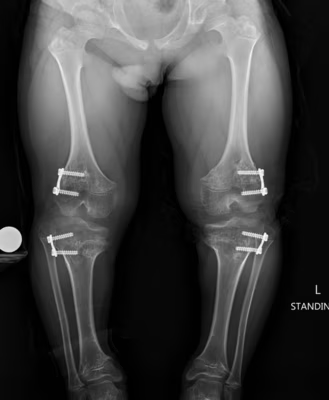
Genu varum
Short stature
Nahm et al Orphanet J Rare Dis 2023
- CLARITY cohort study of 1374 patients with achondroplasia
- 30% one orthopedic surgery
- 22% multiple orthopedic surgery
- 13% spine surgery
Foramen magnum stenosis
Issues
Cervicomedullary compression
- neurological / myelopathic symptoms
- delayed motor skills
- difficulty swallowiing
- apnea and risk of sudden death: highest risk during first year
Screening
Clinical examination / Sleep study - can miss foramen magnum stenosis
Routine screening MRI recommended for all children 3 - 6 months
MRI / achondroplasia foramen magnum score 0 - 4
- 0: normal foramen magnum
- 1: narrowed craniocervical junction with maintained cerebrospinal signal around the cord
- 2: effacement of the cerebrospinal fluid signal at the craniocervical junction
- 3: represents indentation of the cord at the craniocervical junction
- 4: compression with myelopathic increased T2 cord signal.
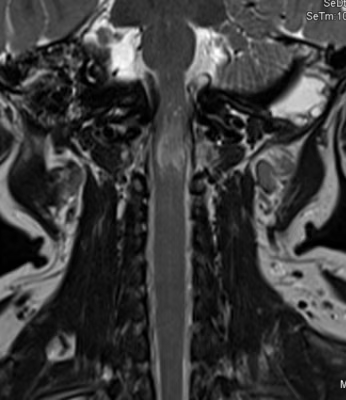
4: indentation of cord with myelopathic changes on T2
Management
Foramen magnum decompression +/- cervical laminectomy
Akinnusotu et al J Neurosurg Pediatr 2023
- systematic review of neurosurgical management foramen magnum stenosis in achondroplasia
- 153 patients mean age 3
- indication: apnea 48%, MRI cord signal 28%, myelopathy 27%, delayed motor skills 15%
- foramen magnum decompression 99% of patients + cervical laminectomy 65% of patients
- 91% resolution of symptoms
- 2% mortality, 9% reoperation, 21% complications
Spinal Stenosis
Clinical presentation
Present early adolescence and onwards
- heavy legs / neurogenic claudication
- numbness / tingling
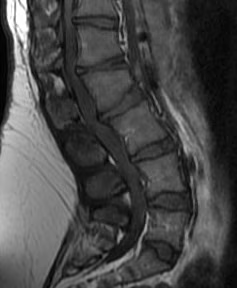
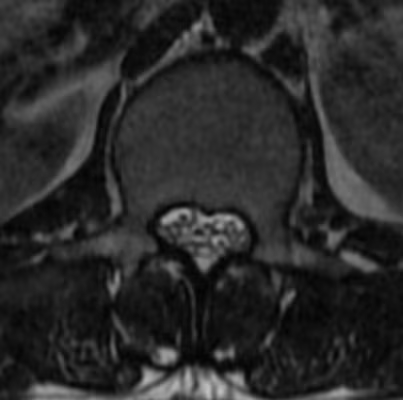
Mechanism
Short pedicles / narrow spinal canal / narrowed lateral recesses
Management
Akinnusotu et al J Neurosurg Pediatr 2023
- systematic review of neurosurgical management spinal stenosis in achondroplasia
- 100 patients mean age 13
- indication: neurogenic claudication 59%, back pain 15%, and sciatica 8%
- isolated laminectomy 23%, instrumented fusion 73%
- 95% resolution of symptom
- 17% complications, 18% reoperation
Thoraco-lumbar kyphosis
Incidence
Present in 80 - 90% of achondroplasia
Reduces over time - 10% by age 10
Management
Trial bracing
Cobb > 50 degrees over age 5
- may need 360 degree decompression and fusion
- complex surgery due to anatomical variations of lumbar vertebrae
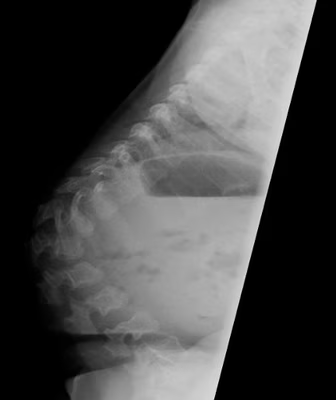
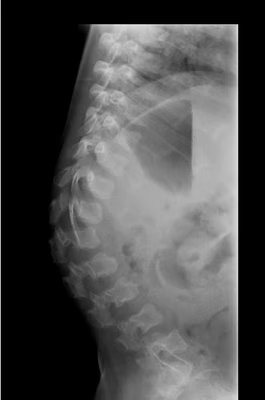
Kyphosis that resolves with standing / extension
Majority resolve with ambulation and maturity
Genu valgum
Management
Guided growth
Most effective < 10 years due to limited growth potential
Limb lengthening
Unclear if it improves QOL or functional ability in achondroplasia
- systematic review of limb lengthening in achondroplasia
- 14 studies and 1100 patients
- average lengthening: femur 9cm, tibia 7 cm, humerus 8 cm
- complication rate 56%
- moderate improvement in QOL