
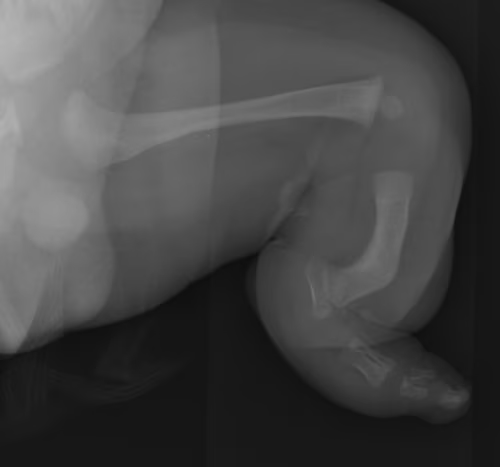
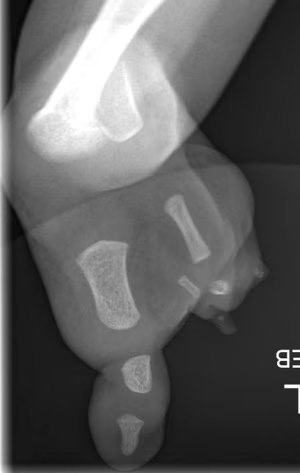
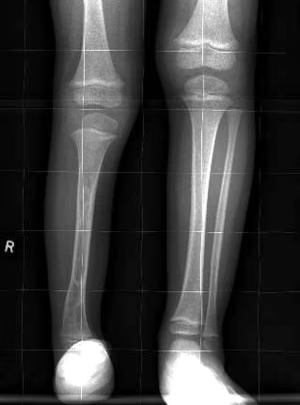
Definition
Deficiency of bony elements on lateral side of lower limb
- partial or complete absence of fibular
- anteromedial tibial bowing
- missing lateral toes
Wide spectrum of presentation
Epidemiology
1:50,0000 births
Occasionally bilateral
Unknown cause / not inheritable
Clinical issues
Two major issues for clinicians
- significant leg length discrepancy > 20
- foot and ankle instability / lateral ray deficiency / equinovalgus / equinovarus
| Leg length discrepancy | Foot and ankle | Tibial deformity | Knee valgus | Knee instability |
|---|---|---|---|---|
|
Short tibia Short foot +/- short femur
Can be severe |
Unstable valgus ankle - deficient fibula - ball and socket ankle joint - subtalar coalition
Small deficient foot |
Tibial bowing
Tibial malalignment |
Physeal issues tibia and femur |
ACL +/- PCL deficient
Anterior subluxation of the tibia |
1. Leg length discrepancy
- can be significant > 20 cm
- short femur / short foot / valgus foot / +/- short femur
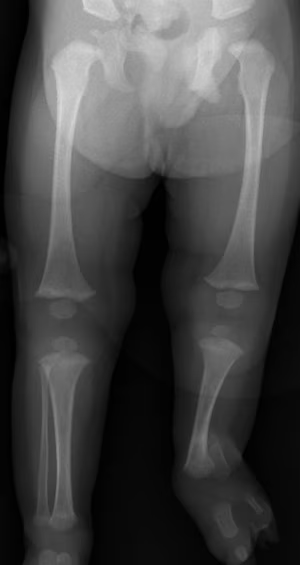
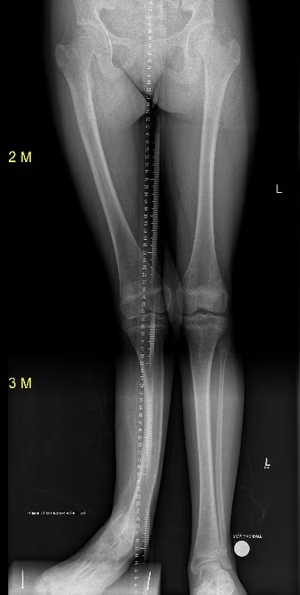
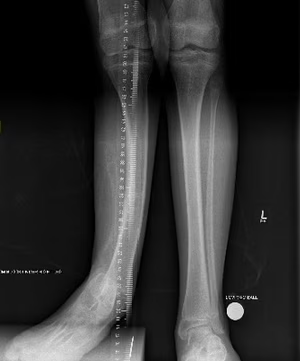
2. Foot and ankle deformity
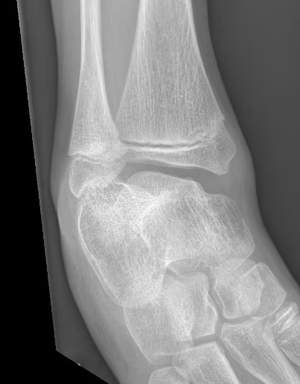
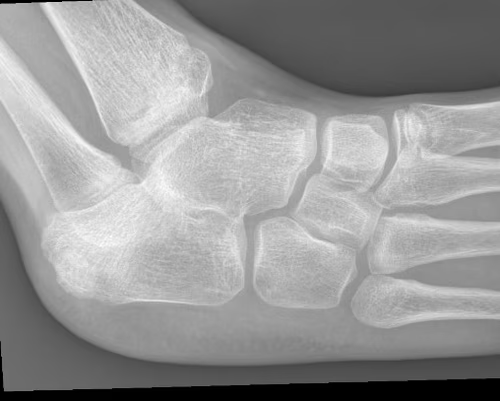
- unstable valgus ankle - deficient fibula / ball and socket ankle joint
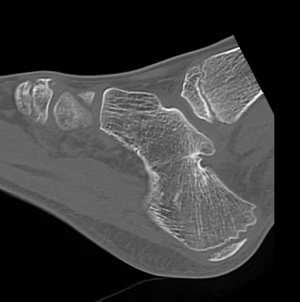
- subtalar coalition
- missing lateral rays
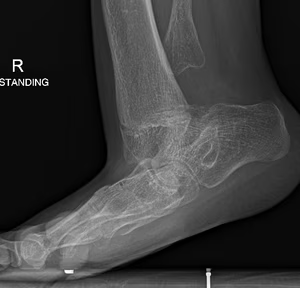
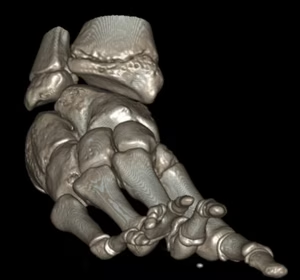
Tarsal coalition and ball & socket joint in fibular hemimelia
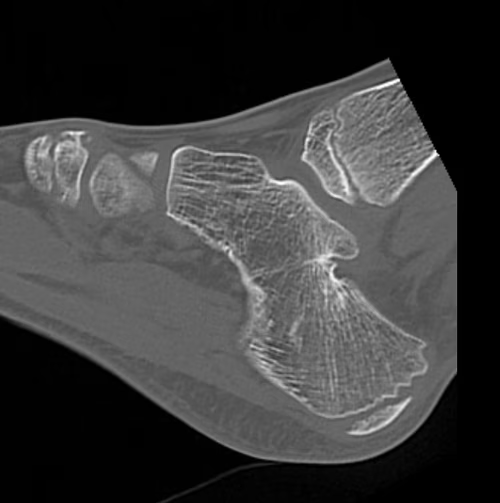
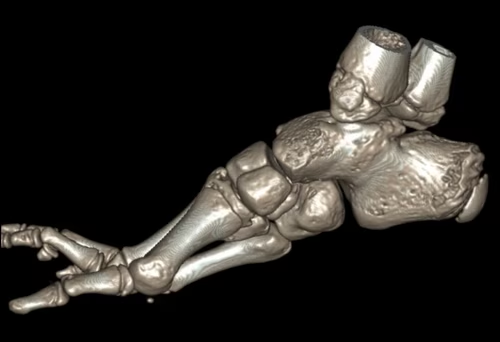
Subtalar coalition in fibula hemimelia
3. Tibia bowing
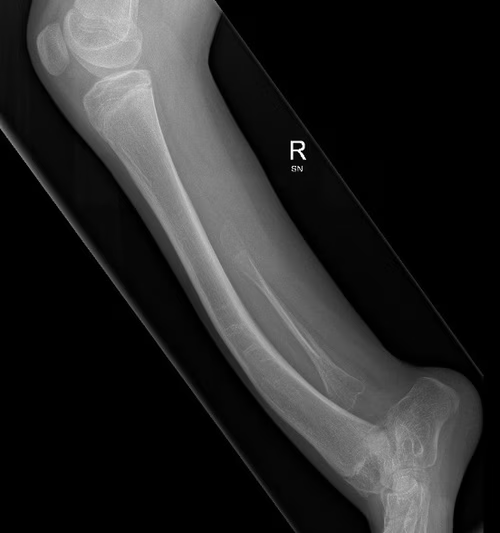
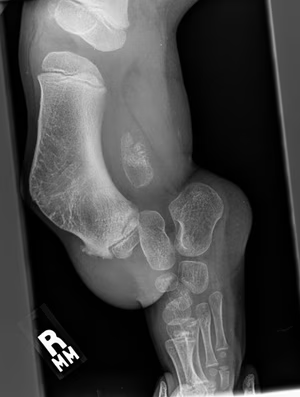
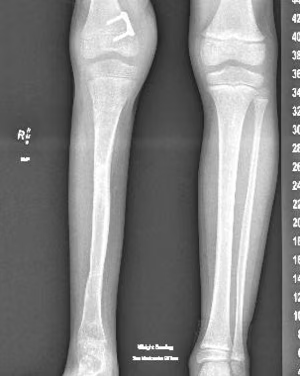
Tibial bowing in fibular hemimelia
4. Knee valgus and knee instability
- lateral physeal issues at knee
- 95% ACL +/- PCL deficient
- anterior subluxation of the tibia
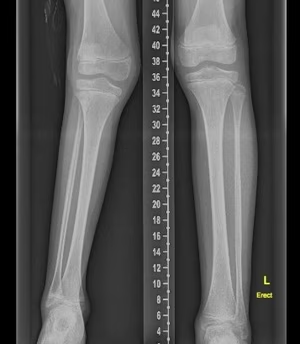
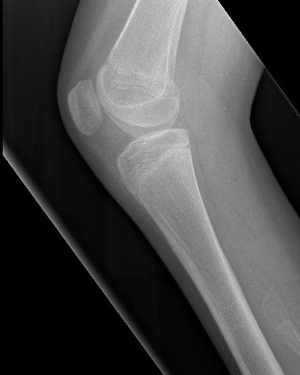
Valgus malalignment and anterior subluxation of the knee in fibular hemimelia
Classification
Paley classification
- based on foot and ankle deformity
- main guide to surgical treatment
| Type 1 | Type 2 | Type 3 | Type 4 |
|---|---|---|---|
|
Stable ankle
|
Dynamic valgus
|
Fixed equinovalgus | Fixed equinovarus |
| Usually mild fibula deficiency |
Short fibula Ball and socket ankle |
Abnormal distal tibia Tarsal coalition |
Tarsal coalition Significant tibial bowing |
Management
Goals
Stable, plantigrade foot
Equal leg lengths
Neutral knee alignment
Stable knee
Options
Ankle reconstruction / multiple leg lengthening procedures
Amputation
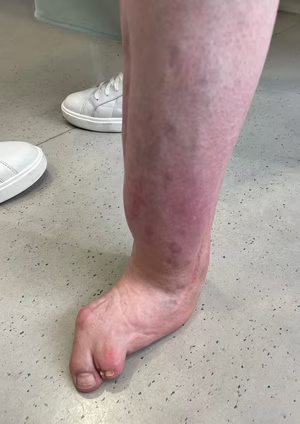
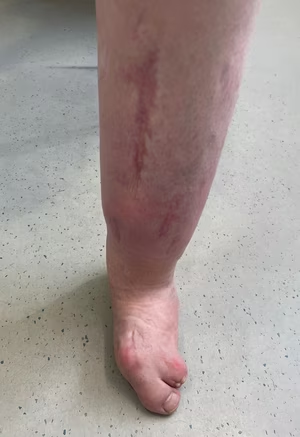
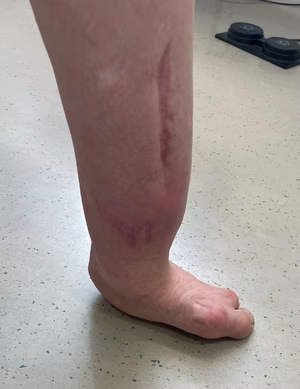
Elmherig et al J Pediatr Orthop 2020
- systematic review of limb reconstruction versus amputation
- better patient satisfaction with fewer surgeries and complications with amputation
Foot & ankle
Reconstruction
Paley classification
- Type 1 / stable ankle: no treatment
- Type 2 / dynamic valgus: realignment osteotomy of the distal tibia
- Type 3/4 / fixed equinovalgus / equinovarus: realignment osteotomy + soft tissue lengthenings and releases
Timing
- aged 18 months
- combined with first tibial lengthening
- combined with lateral knee hemiepiphysiodesis for valgus malalignment
Technique
Paley SUPERankle procedure
- resection of fibula analage / fibular remnant
- soft tissue hindfoot releases
- tibial + hindfoot osteotomy
Results
Shadi et al J Pediatr Orthop 2025
- 17 patients average age of 5 with severe equinovalgus deformity
- all patients underwent SUPERankle procedure
- all achieved stable plantigrade stable ankle
- in 40% deformity recurred
Leg length discrepancy
www.boneschool.com/pediatrics/leg-length-discrepancy/management
Estimate LLD
- follows a constant Shapiro type 1 curve
- can be up to 25 cm
- more than 25 cm usually associated with short femur
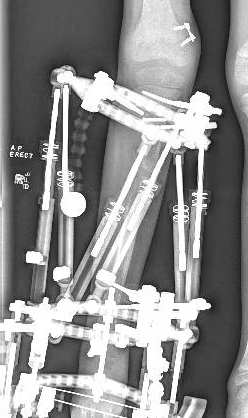
Technique
- 3 tibial lengthening procedures aged 18 months / 8 years / 12 years
- max 21 cm
- contralateral epiphysiodesis as necessary
Results
- 32 patients with Type III fibular hemimelia undergoing leg lengthening
- average of 6 procedures per patient
- equal leg lengthen and plantigrade foot achieved in 50%
- satisfactory outcome 53%, good outcome 25%
- amputation 6%
Knee valgus
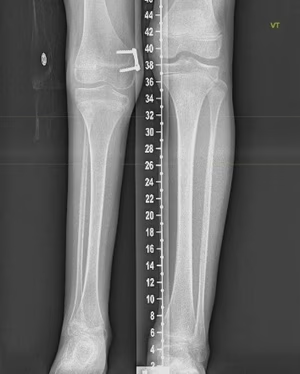
Technique
Lateral femur +/- tibial temporary hemi-epiphysiodesis
Results
Cuoghi et al J Pediatr Orthop 2025
- 16 cases of fibular hemimelia with valgus malalignment
- successful treatment with temporary hemi-epiphysiodesis in all cases
- 86% relapse after 2 years
Amputation
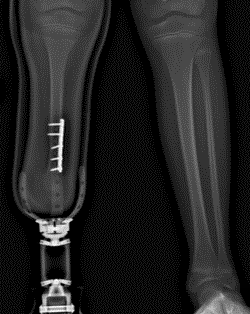
Options
Symes / Boyd amputation
Indication
Severe ankle deformity
Significant LLD