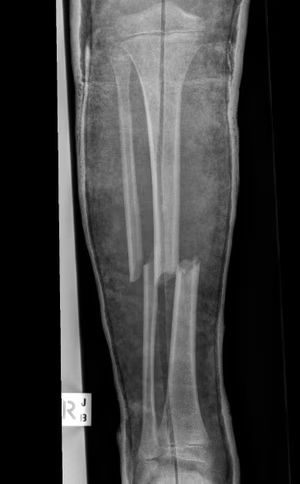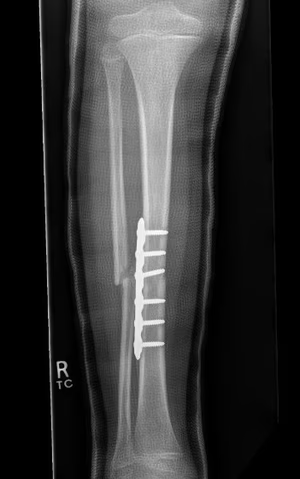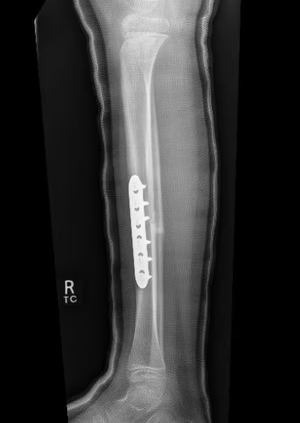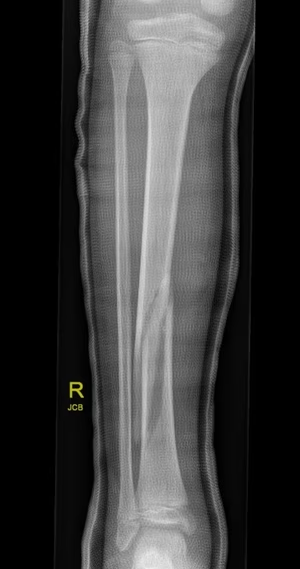
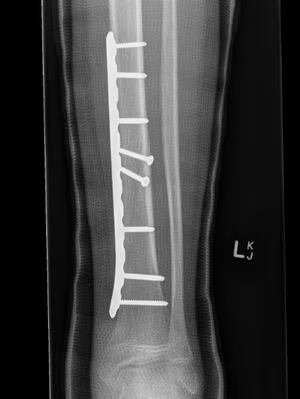
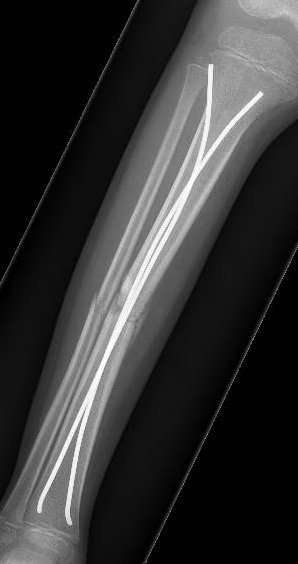
Epidemiology
Third most common pediatric long bone fracture
- 40% shaft
- 30% distal third
30% high energy injuries
- poly-trauma
- open fractures
- compartment syndrome
Management options
Closed reduction and casting
ORIF
- plate
- flexible nails
- external fixation
Nonoperative management
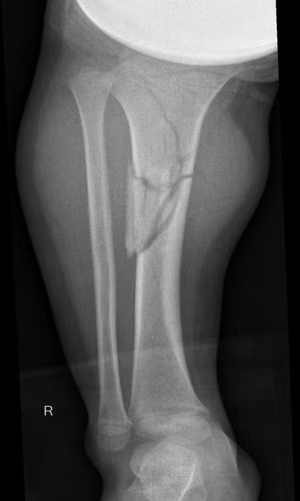
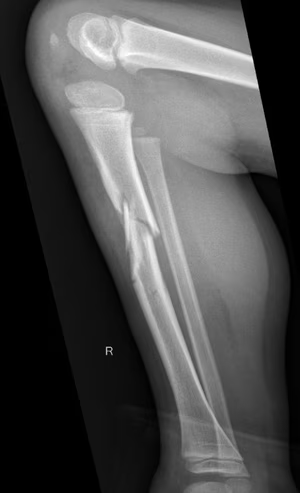
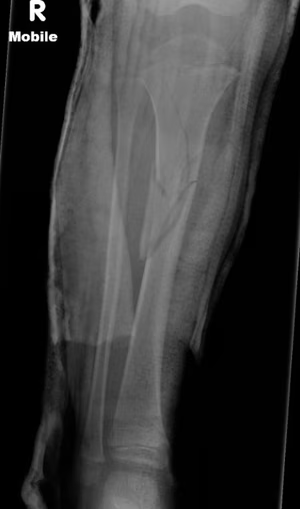
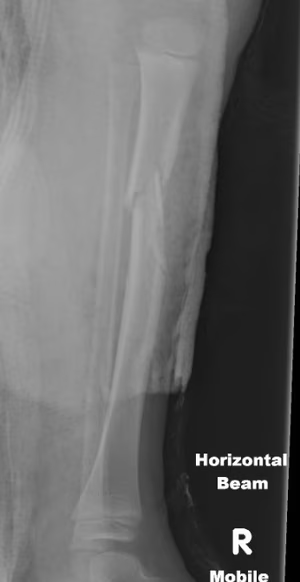
Acceptable reduction
| < 8 years old | > 8 years old | Duration of casting |
|---|---|---|
|
Varus / valgus <10o Anterior / posterior < 10o Rotation 10o Shortening <10 mm |
Varus / valgus <5o Anterior / posterior < 10o Rotation 10o Shortening <5 mm |
Neonates 2-3 weeks Juveniles 4-6 weeks Adolescents 8-12 weeks |
Long leg casting
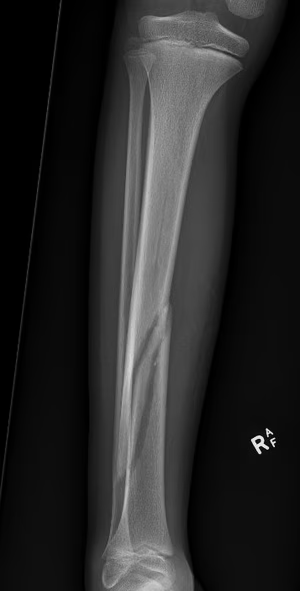
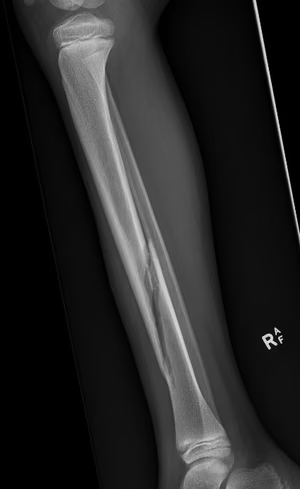
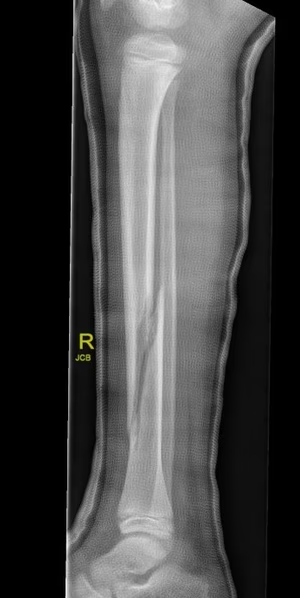
Results
Stenroos et al Eur J Pediatr Surg 2020
- systematic review of pediatric 1000 tibial shaft fractures
- 75% treated nonoperatively
- 5% went on to require surgery
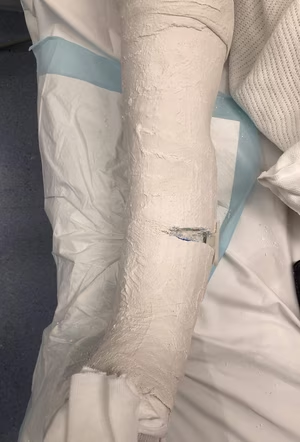
Technique of long leg cast
General anesthesia and fluoroscopy
- leg hanging over edge of bed
- gravity assists reduction
- apply short leg cast
- check reduction
- apply long leg cast in 45° knee flexion
- helps control unstable fractures and prevents early weight bearing
- valgus moulding if fibular intact
- varus moulding if fibular fractured
- plantar flexion ankle - mild plantar flexion for first 2-3 weeks to prevent posterior angulation
- 20° plantar flexion for middle & distal third
- 10° plantar flexion for proximal third
Weekly xrays to ensure reduction maintained
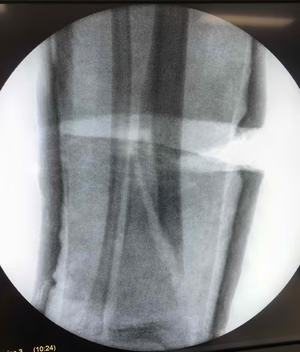
Cast wedging
Technique article cast wedging PDF
Operative management
Indications
Open fractures
Irreducible fractures
Compartment syndrome
Multi-trauma
Failure nonoperative management
Options
Flexible nails
Plate
External fixation - substantial bone loss
Flexible nails
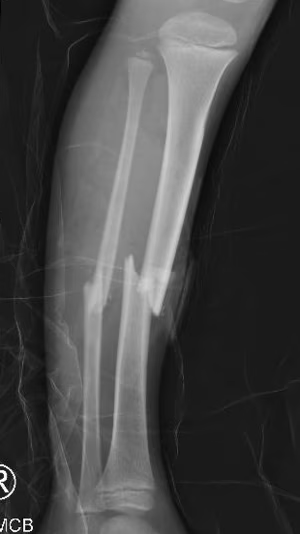
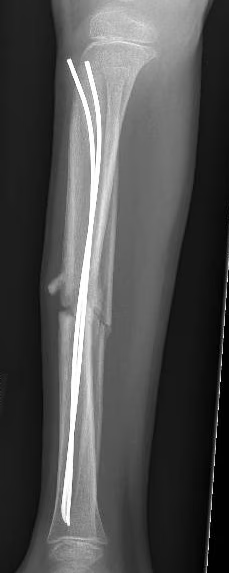
Indications
Midshaft / length stable fracture
Failure nonoperative management
Open fractures
Risks
Delayed / nonunion
Residual angular deformity
Technique
JBJS Essential surgical technique flexible nails tibial fractures PDF
POSNA surgical technique tibial shaft flexible nails video
Vumedi tibial shaft flexible nail video
Results
Pennock et al J Pediatr Orthop 2020
- 172 tibial shaft fractures treated with flexible nails
- 3% nonunion
- 10% delayed union (>6 months to heal)
- 57% residual deformity > 5 degrees
- 14% residual deformity > 10 degrees
Fanelli et al Arch Orthop Trauma Surg 2022
- systematic review of 835 tibial shaft fractures treated with flexible nails
- 98% union at mean of 12 weeks
- delayed union in 4%
- non-union in 1%,
- malunion 9%
- leg-length discrepancy in 5%
- deep infections in 1%
- compartment syndromes in 1%
- refracture in 0.2%
Plate fixation
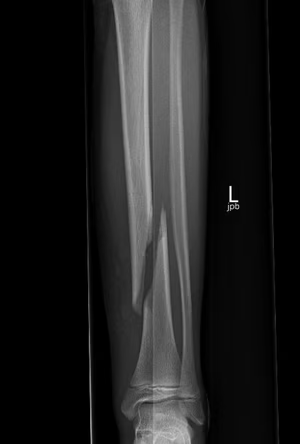
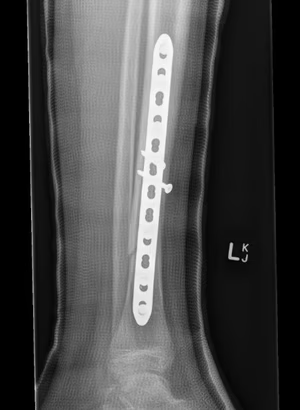
Indication
Distal fractures
Proximal fractures
Comminuted fractures
Intra-articular fractures
Technique