

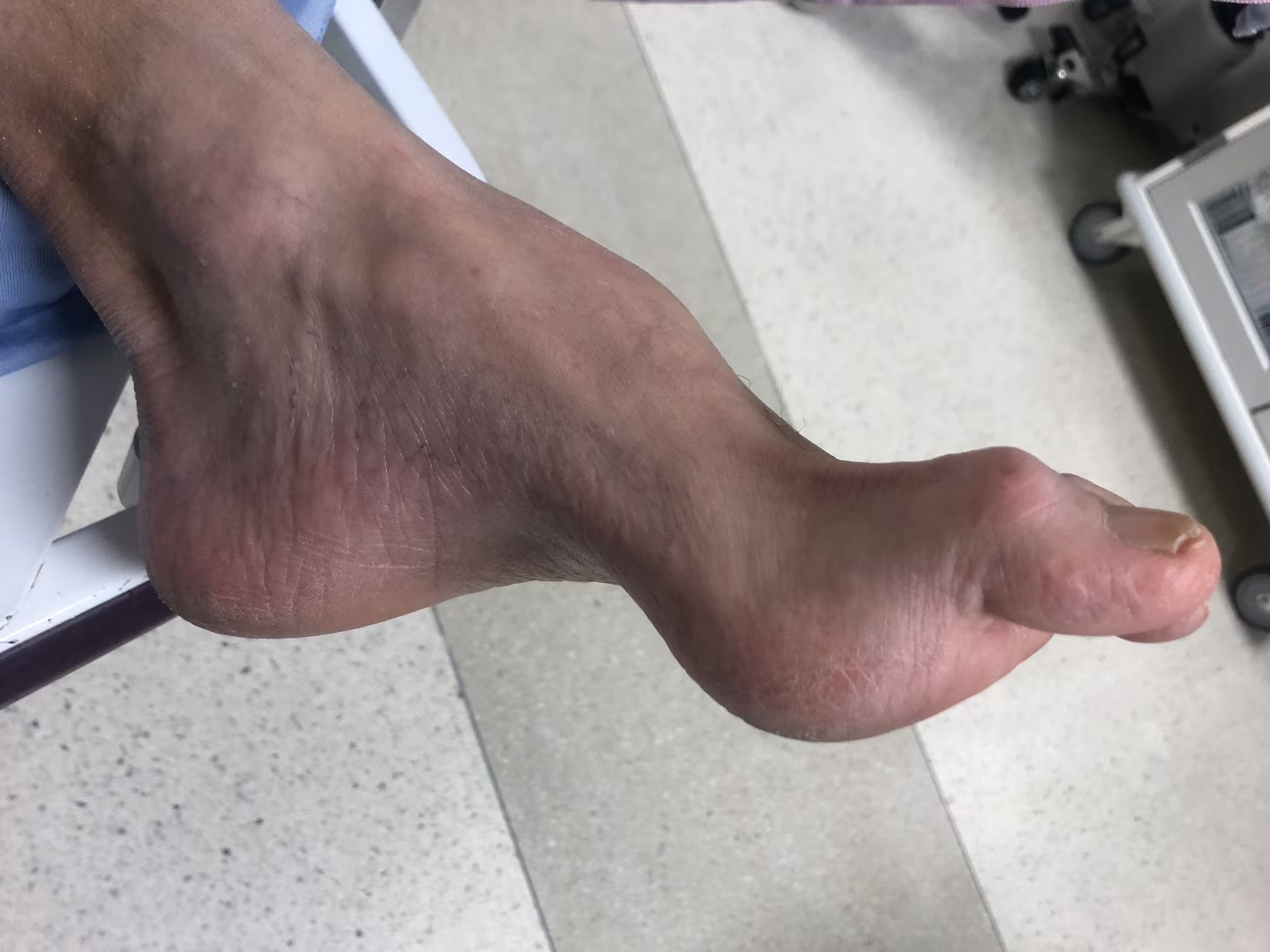
Definition
Group of hereditary motor sensory neuropathies
Symmetric, slowly progressive distal motor neuropathy
- lower limbs > upper limbs
- presents in 3rd decade
- foot drop
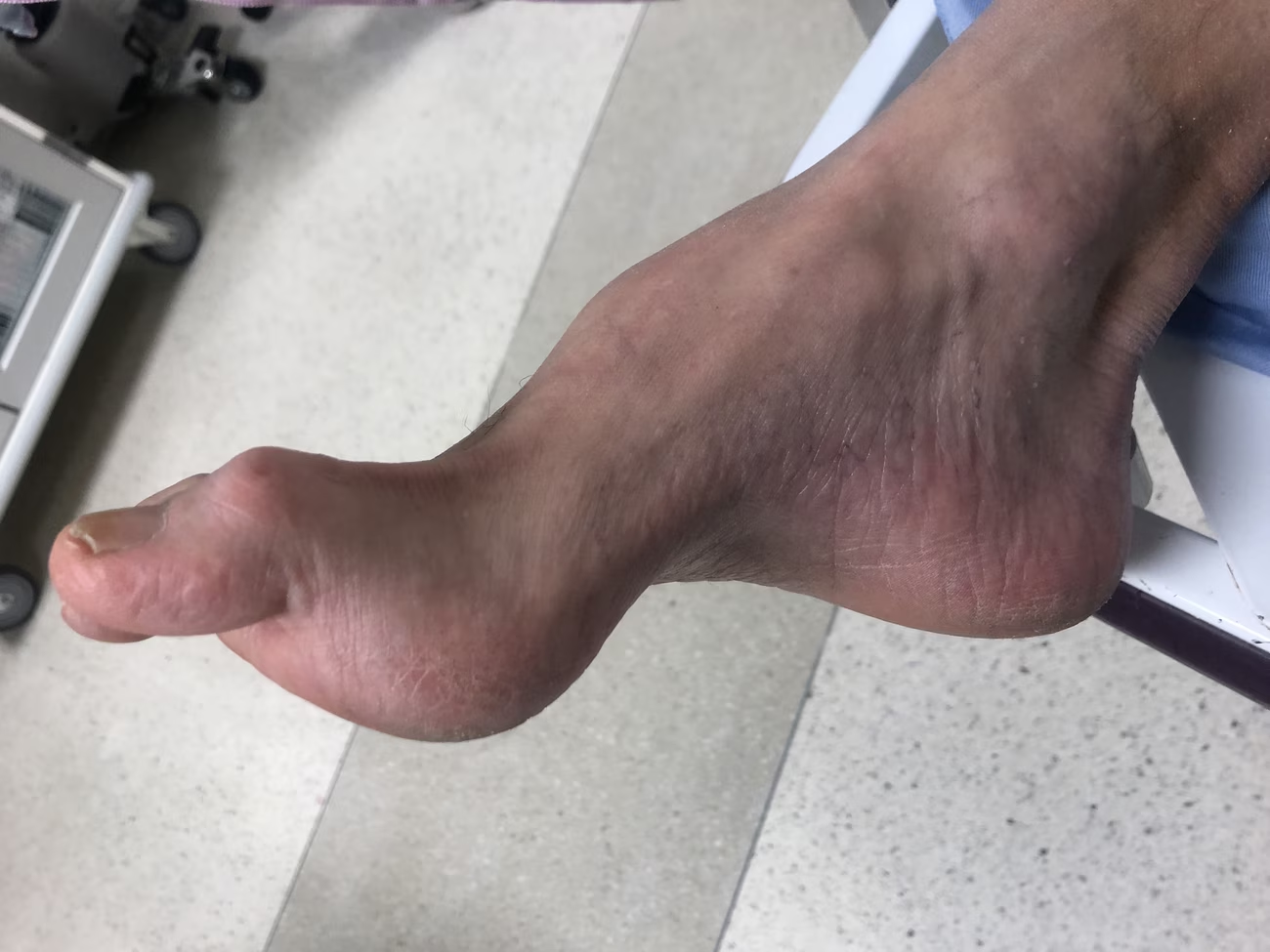
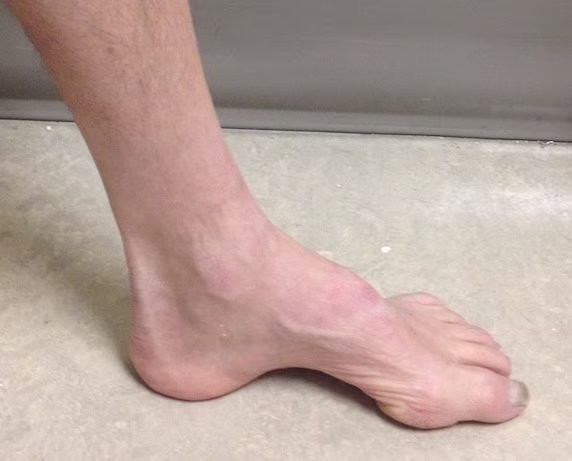
- pes cavus
Epidemiology
1: 10,000
Types
Over 120 different gene mutations identified
- 4 most common types based on inheritance and nerve biopsy
- multiple other less common types
| CMT1 (AD Demyelinating) | CMT2 (Axonal) | CMT4 (AR demyelinating) | CMTX |
|---|---|---|---|
| Autosomal dominant | Autosomal dominant | Autosomal recessive | Mutation on the X chromosome |
| Demyelinating peripheral neuropathy | Axonal neuropathy without demyelination |
Demyelinating
|
Men > women |
|
Areflexia Reduced nerve conduction velocity |
Reflexes preserved Normal nerve conduction velocity |
Early onset More severe |
|
|
Significant lower limb wasting Also affects upper limbs |
Less severe than CMT1 |
Significant spinal deformity
|
Diagnosis
Nerve conduction tests: slowed motor conduction velocity CMT1
Nerve biopsy
Genetic testing
Orthopedic Issues

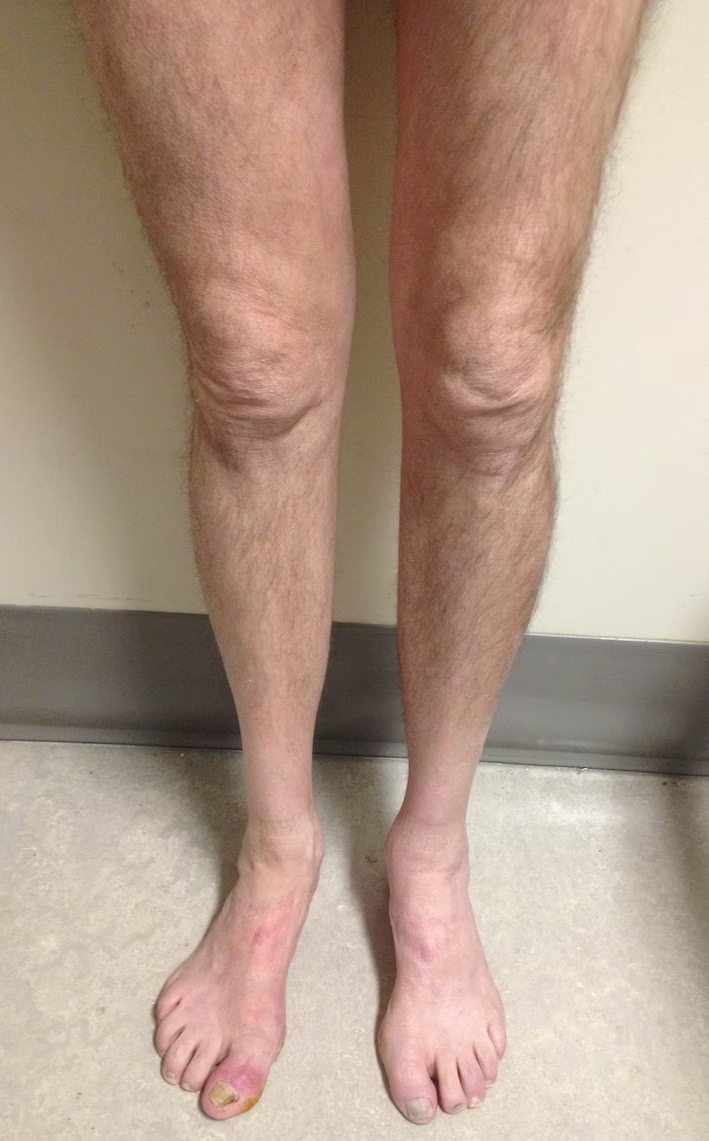
Lower limb distal muscle weakness
- symmetrical distal muscle weakness and wasting
- stork-leg appearance
- foot drop gait
Glove and stocking sensory loss
Cavovarus foot / Claw toes
Hip dysplasia
Chaclas et al J Pediatr Soc North America 2024
- 358 patients with CMT
- 21% acetabular dysplasia
- 14 CMT patients versus 45 DDH patients for PAO
- CMT worse acetabular dysplasia / hip subluxation / coxa valga
Upper limb
Variable presentation
- intrinsic wasting of medial and ulna nerve muscles
- loss of dexterity

