
Definition
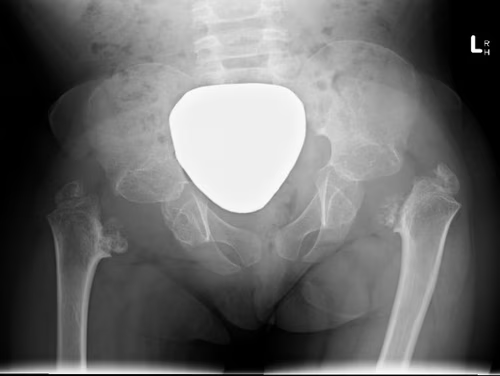
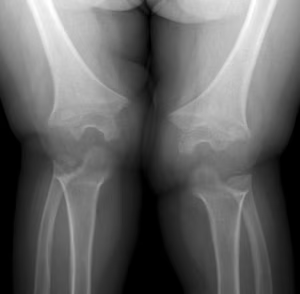
Symmetrical small flattened irregular epiphyses
- disturbance of endochrondral ossification of epiphyses of tubular bones
- leads to early osteoarthritis
Vertebrae normal unlike SED
May have short stature (36%)
- short limbs with normal trunk
- usually 145 - 170 cm tall
Etiology
Mutation in COMP (cartilage oligomeric matrix protein) gene
AD with variable expression
Clinical presentation
May need genetic testing for diagnosis
Dasar et al Eur J Pediatr 2025
- 27 patients with MED
- most commonly affected hip and knees
- mean age of 10 at genetic diagnosis
- 36% short stature
- 68% joint pain
- 28% required orthopedic surgery
Types
Spectum of pathology depending on how many joints are involved
Ribbing - mild form, affects only the hips
Fairbank - more severe, affects the epiphyses of all long bones
Xray
Epiphyseal ossification smaller and fragmented
- symmetrical involvement
- joint surfaces flattened & irregular
- leads to premature osteoarthritis
Hip
Most frequently & severely involved
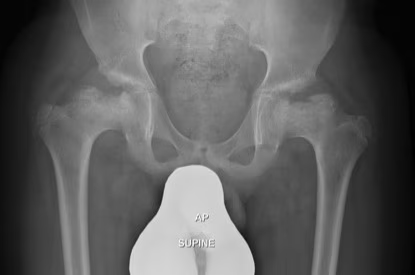
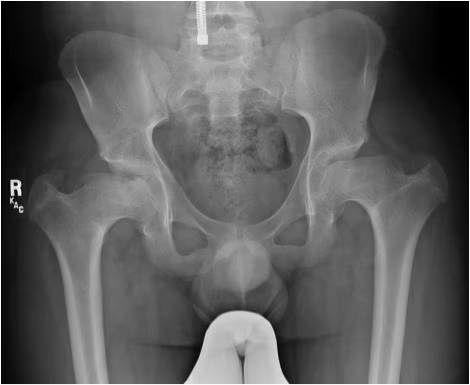
- small irregular & fragmented capital epiphyses
- acetabulum affected
Differential diagnosis
- Perthes - asymmetrical, normal acetabulum
- Spondyloepiphyseal dysplasia - affects vertebra
Natural history
- progressive flattening & extrusion of head
- coxa vara
- early OA
Management
Hip containment
- valgus inter-trochanteric osteotomy
- acetabular osteotomy
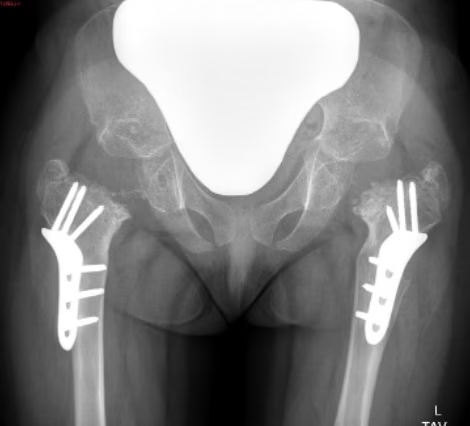
Results
Andrzejewski et al J Pediatr Orthop 2021
- 33 hips with MED and pseudoachondroplasia
- Chiari osteotomy with 20 years follow up
- hip survival 80%
Knee
Genu valgum with irregular segmented epiphysis
Consider hemi-epiphysiodesis / guided growth for angular deformity
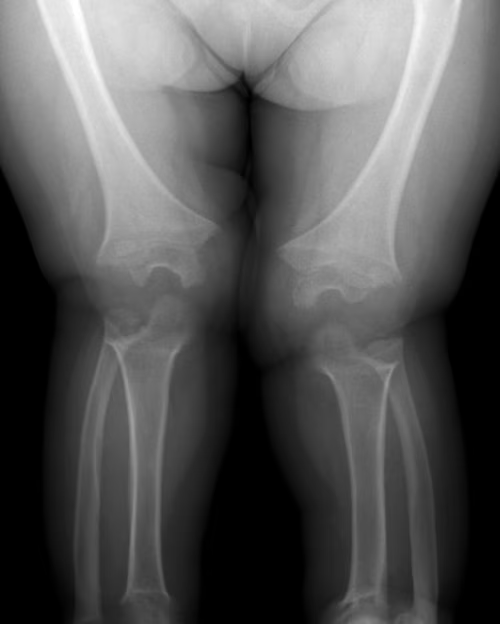
Cho et al J Pediatr Orthop 2009
- stapling for angular deformity in 17 knees with MED
- some incidence of undercorrection / rebound / physeal closure