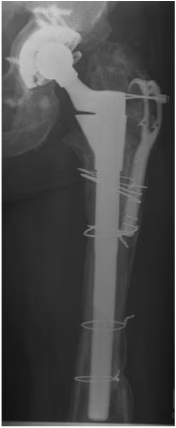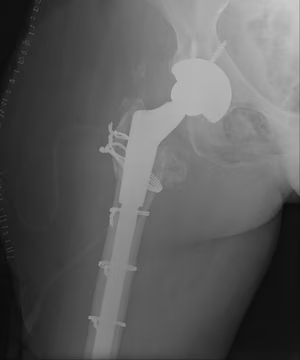
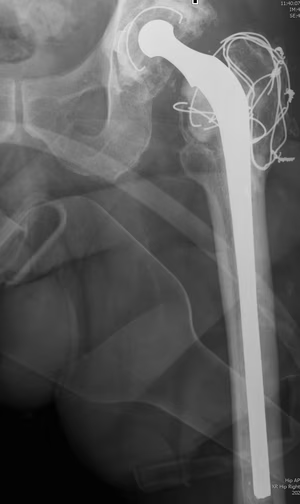
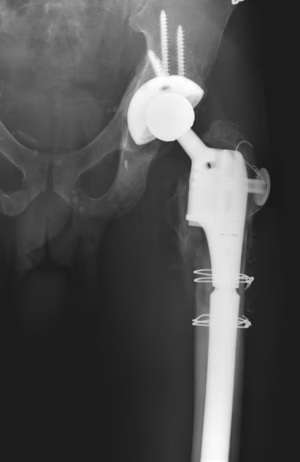
E Reimplantation Femur

Implant Options


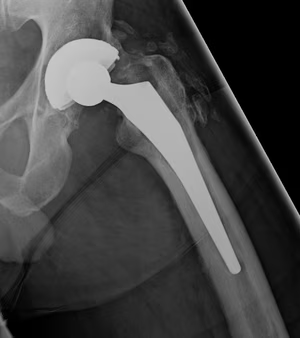
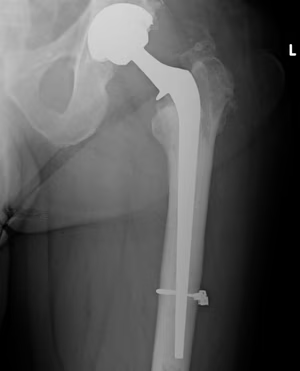
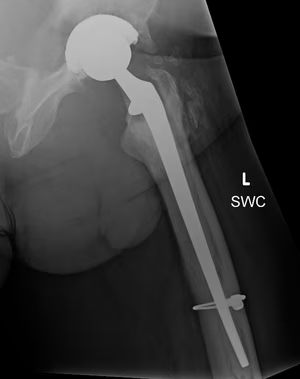
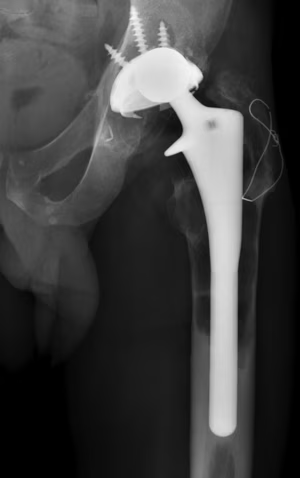
1.  Long stem cemented revision femoral stem


Modern cementing techniques

- removal of neocortex


Advantage

- use in all cases

- good with elderly fragile bone

- can use Abx cement (decreases infection rate)


Indications

- Paprosky Types I – IV

- very versatile


Technique

- complete removal / debridement of neocortex

- modern cementing techniques


Howie JBJS Br 2007

- 219 patients, 9 year follow up

- collarless double taper

- 98% 10 year survival


Problems

- ? increased non union with ETO


2.  Extensively porous coated diaphyseal fitting uncemented stem


Indications

- Paprosky Types I, II, IIIA


Results

- 90- 95% 10 year survival


Problems

- fracture

- stress shielding with additional proximal bone loss


3.  Modular diaphyseal fitting, proximal filling uncemented stem


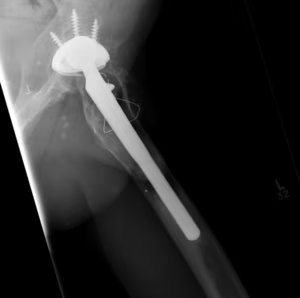
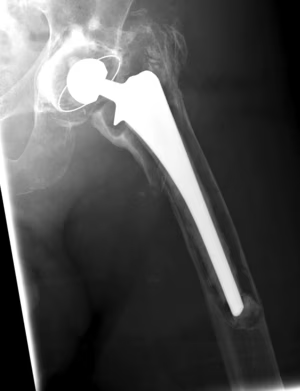
Revision THR Modular Long Stem UncementedModular Revision Implants


Design

- press fit metaphyseal segment

- slotted diaphyseal segment

- initial stability through distal fixation


Indications

- Paprosky Types I – IIIB


Smith J Athroplasty 1997

- nil revisions at 5 years

- 7% radiographically loose


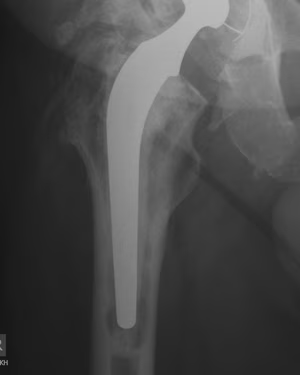
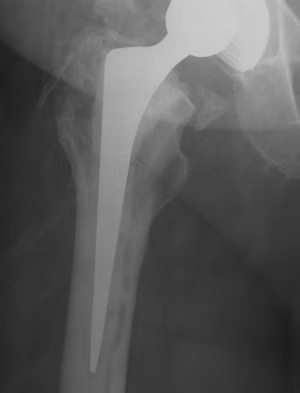
Type 3 Revision Femur 2


4.  Impaction bone grafting


Concept

- morcellised bone graft is osteoconductive, not osteoinduction

- resorption and eventual replacement new bone

- 6 – 12 months

- process is incomplete


Van der Donk Clin Orthop 2002

- 30% complete 6/12

- 90% complete 12/12


Requirements

1.  Particulate cancellous autograft 7-10 mm

2.  Contained defect

3.  Ability to convert uncontained into contained (i.e. mesh)


Issues

- technically demanding

- takes time

- need axial and rotational stability

- avoid stem subsidence > 5 mm


Indications

1. Uncemented distal fixation not possible (< 4cm diaphysis)

2. When reconstruction of proximal bone stock important

- young patient in whom biological solution more desirable


Technique


Templating

- choose stem 2 cortical diameters longer than most distal lytic area


Exposure

- full exposure of proximal femur

- removal stem & cement


Can leave distal plug

- not infected

- > 2 cm past planned tip location


Create contained defect

- reconstitute femoral tube

- create contained defect

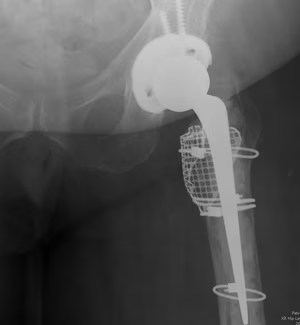
- wire mesh & cerclage wire

- prophylactically cerclage wire shaft if diaphysis flimsy


Distal Occlusion

- threaded intramedullary plug inserted on guide rod

- impacters tested to see max depth of insertion before abutment on canal

- morsellised allograft inserted

- impactor & slap hammer slid over guide wire

- graft impacted to predetermined depth

- continued by introducing more chips with larger impacters

- stopped when level is 10 cm from tip of GT


Proximal Impaction

- appropriate proximal impactor equivalent to selected stem used

- used to force chips against walls of canal

- then larger distal impactor used

- alternated till canal filled

- should be firm neo-canal


Trial Reduction

- trial stem inserted

- depth of insertion marked

- proximal impactor driven in another 5 mm

- creates room for cement


Prosthesis

- cemented polished collarless double tapered stem


Post-op

- NWB for ? 3/52

- then gradual inc over next 3/ 12


Results


Halliday JBJS Br 2003

- 90.5% 10 year survival


Elting Clin Orthop 1995

- 93% graft incorporation

- stem subsidence in 48%


Elridge JBJS Br 1996

- > 5 mm subsidence in 22%


Management Plan


Assess Metaphyseal & Diaphyseal Bone Stock


Grade Paprosky, then manage appropriately


Paprosky Type 1


Definition


Minimal metaphyseal cancellous bone loss

Intact diaphysis     


Options


Simple revision

- can use standard or any revision stems


A. Uncemented

- standard length proximal fit and fill

- need appropriate initial stability


B. Cemented standard length stem

- must remove neocortex

- need good cement interdigitation


Izquierdo JBJS Br 1994

- 90.5% 19 year survival


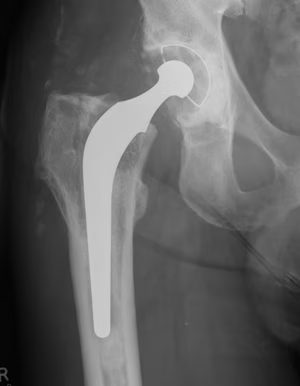
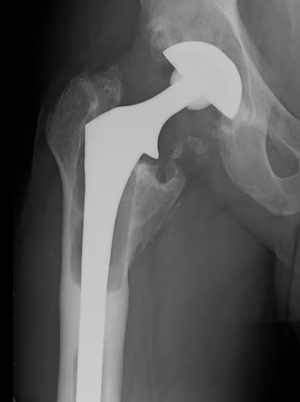
Revision Femur Type 1 Standard Cemented Stem Pre opRevision Femur Type 1 Standard Cemented Stem Post op


C. Cement onto old mantle

- clean and dry mantle critical

- thin layer of blood 85% reduction shear strength


Lieberman et al JBJS Br 1993

- 19 cases

- no loosening at 5 years in all


Revision Femur Paprosky 1 Revision Femur Paprosky 1 Cement in old Cement Mantle


Type 2


Definition


Extensive metaphyseal cancellous bone loss

Diaphysis intact


Options


A.  Extensively porous coated diaphyseal fitting implant


Paprosky 90& osteointegrated


Calcar Replacement Uncemented Stem


B.  Long stem cemented revision stem


Revision Femur Long Stem Cemented Femoral Component


C.  Modular diaphyseal fitting, metaphyseal filling uncemented prosthesis


D.  Impaction bone grafting


Type 3A


Definition


Metaphysis non supportive

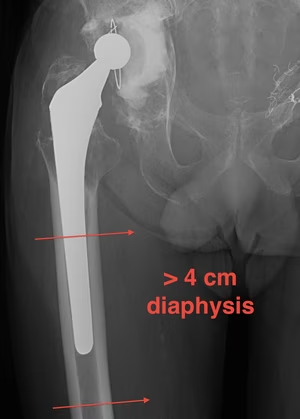
> 4 cm diaphysis proximal to isthmus


Type 3 A FemurType 3A Femur Lateral


A.  Extensively porous coated diaphyseal fitting implant


Type 3 Revision Femur


Paprosky 20/22 91% osseointegrated


B.  Long stem cemented revision stem


Revision Femur Long stem Cemented Component


C.  Modular uncemented


D.  Impaction bone grafting


Revision Femur Type IIIA Pre Impaction Bone GraftingRevision Femur Type IIIA Post Mesh and Impaction Bone Grafting


Type 3B


Definition


Metaphysis non supportive

< 4cm diaphysis proximal to isthmus


Options


A.  Extensively coated diaphyseal fitting


Paprosky 4/8 failed

- i.e. need > 4cm of diaphysis for this to work


B.  Long stem cemented revision stem


C.  Modular uncemented, stem with flutes for rotational stability


D.  Impaction bone grafting


Revision Femur Type 3 Mesh and Impaction Bone Grafting


Type 4


Definition


Metaphysis and diaphysis extensively damaged

Isthmus non supportive


Options


A.  Long stem cemented revision stem


B.  Impaction bone grafting


Management Bone Defects


1.  Segmental defects


A.  Must bypass any cortical defect by two cortical diameters to reduce fracture risk


B.  Cortical Strut onlay grafts


2.  Extensive proximal bone loss


A.  Calcar replacing


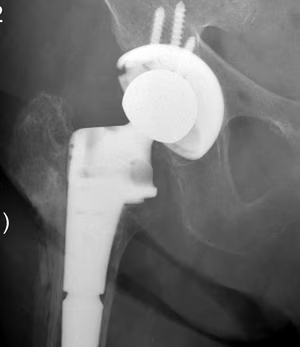
Calcar Replacing THRCalcar Replacing Hip Replacement


Indications

- proximal segmental defect < 3cm


McLaughlin JBJS Am 1996

- 38 hips 11 years

- 80% survival

- another 10% radiologically loose

- 20% dislocation rate


B.  Napkin ring  / Calcar graft Allograft


Indications

- circumferential proximal defects < 3cm


Results

- poor

- 40-60% resorption


C.  Proximal Femoral Replacement / Tumour prosthesis


Results disappointing

- however design may be improving


Malkani JBJS Br 1995

- 33 hips 11 years

- poor function (50% severe limp or unable to walk)

- 64% 12 years survival

- 22% dislocation


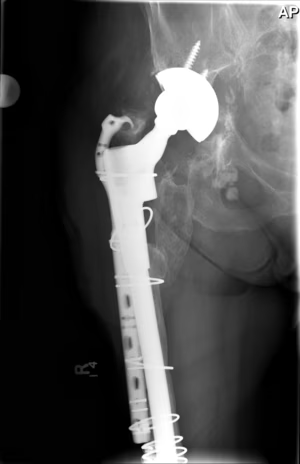
D.  Bulk Structural Proximal Femoral Allograft


Indications

- proximal defect > 3 cm


Technique

- desired stem cemented into allograft

- press fit distally into host femur

- step cut graft host junction

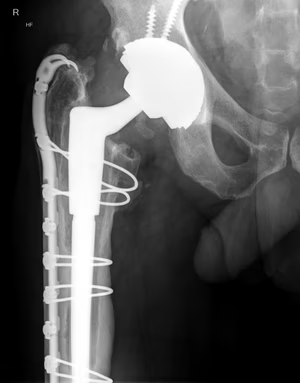
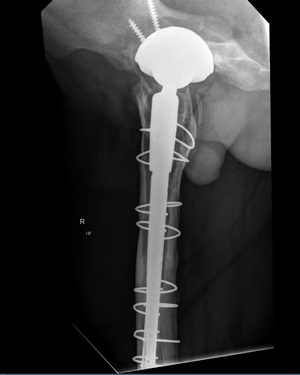
- secure cerclage wire and onlay cortical strut

- proximal host bone wrapped around allograft with ABD preservation

- very important – abductor mechanism must be secured and protected


Gross 1998

- 200 patients, 5 years follow up

- 12.5% revision

- revised for infection, dislocation, graft-host non union