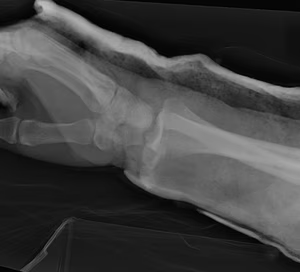
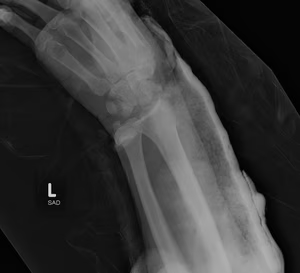
Lunate - triquetal instability
Etiology
FOOSH
Rare
Patho-anatomy
| Intrinsic | Extrinsic |
|---|---|
|
Lunate-triquetal ligament - C shaped - volar / dorsal / membranous - volar component strongest
|
Dorsal radiocarpal ligament
Palmar radio-triquetral ligament Radiocarpal dislocation
A. Radiocarpal Dislocation
Transient synovitis / Septic arthritisClinically
Unwell / irritable Fever Not feeding Unable to weight bear / limp Knee pain
Examination
Fever Limited / painful ROM Hip held flexed and externally rotated - maximises volume of capsule
Lab testsWCC > 12 000 ESR > 40 CRP > 10 Blood cultures
Tibial tubercle fracturesEpidemiology
Adolescent boys
Ossification
Proximal tibia / primary ossification centre
Tibial tuberosity / secondary ossification centre - eventually merges with primary ossification centre
Ogden Classification
Type I - Tibial tuberosity ossification only
ACL rupture pediatricIssues
1. More common recently - more high level sport
2. High risk of reinjuring knee from instability - can suffer permanent severe chondral and meniscal damage
3. Risk of physeal arrest high if bone block across physis - risk is growth arrest with ACL reconstruction
Epidemiology
Hemarthrosis - 60% children have ACL tear |