
AVN
SCFE
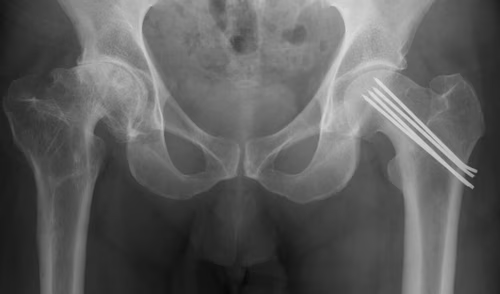
Indications for THA
Osteoarthritis
- abnormal morphology
- loss of head neck offset
- bony impingement on acetabulum
AVN
Kohler's disease
Definition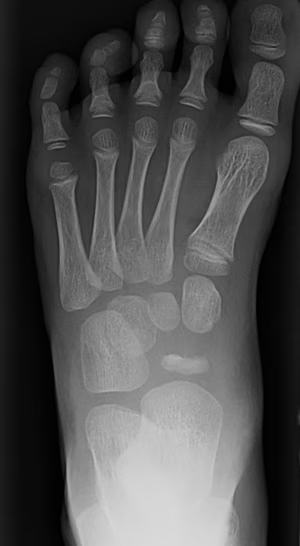
Osteonecrosis of the navicular
Epidemiology
Present at age 4-6 years
- same as Perthes disease
M:F 5:1
Bilateral in 20%
Aetiology
Repetitive trauma to maturing ossific nucleus
ORIF displaced in young
Indications
< 60 with good bone stock and preserved joint space
Reduction
Union rates increased with anatomical reduction
Options
- closed reduction
- open reduction / if closed reduction fails
Accept
- no varus
- < 15o valgus
- < 10o AP plane
Management
Non-Operative
Education regarding shoe wear
- extra wide / large toe box
Insoles
- longitudinal arch support
- pre MT dome for metatarsalgia
- podiatry to attend to callosities
Toe spacers
Analgesia
Operative
Indications
1. Continued pain and discomfort
2. Difficulties with shoe wear
Hip Dislocation
Incidence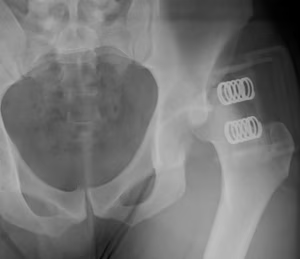
Young men
Posterior / Anterior 9:1
Aetiology
High velocity injury
- head direction at impact decides direction of dislocation
Anterior Dislocation
Externally rotated & abducted leg
- flexion = inferior dislocation
Management 6 - 18 months
Two groups of dislocated hips
1. Late presenters
2. Failures of splint in those < age 6/12
Options
1. Adductor tenotomy + closed reduction
- most surgeons will attempt this initially
- risk of AVN wilth forceful reduction / excessive abduction
2. Open Reduction
- for failure of closed reduction
Management 0 - 6 months
Aim
To obtain and maintain a concentric reduction without complication
Timing
0 - 6 /12
- best time for treatment
- maintain reduction of head & allow normal acetabular development
Equivocal Hip
Obtain ultrasound
Graaf 2A and 2B
- Alpha angle 50 - 59o range
- many will resolve without treatment
Management
Management Summary
Stage 0
Natural history mixed
- depends on size of lesion and diagnosis
- treat if becomes asymptomatic
- may benefit from bisphosphonates
Stage 1 / Normal X-ray, abnormal MRI
Forage: 80% G/E
Bisphosphonates
Stage 2 / Abnormal X-ray with cysts and sclerosis
A: As for Stage I
Background
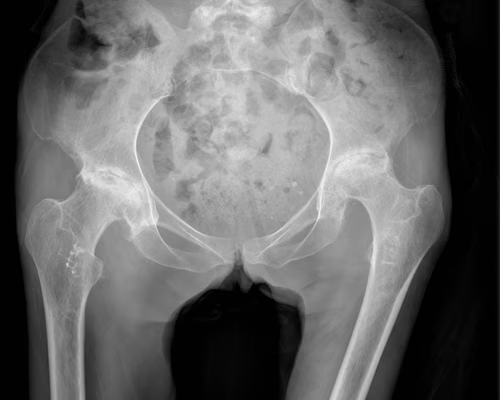
Definition
Non-traumatic or traumatic condition of femoral head with bone death
Epidemiology
20 - 50 yo (average 38)
- M: F 4:1
NHx
70-80% with AVN will progress within 1 year