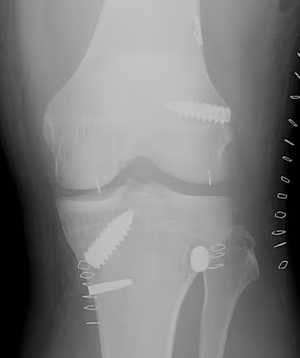
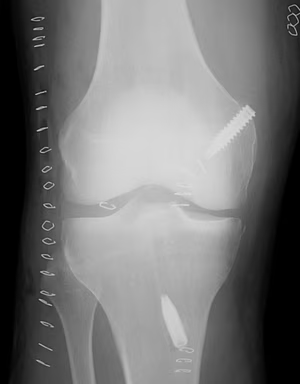
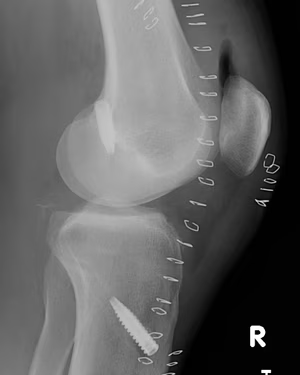
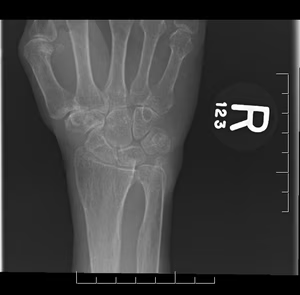
reconstruction

Quadriceps Tendon Rupture

Epidemiology


Usually occurs in patients over 60

- due to decreased vascularity & collagen weakness


Younger patient on steroids / growth hormone


Occasionally occurs in young athlete with excessive contracture


Aetiology


Often preceded by quadriceps tendinosis


ECU subluxation

Anatomy


6th compartment

- fibro-osseous tunnel overlying 1.5 cm to 2.0 cm of distal ulna

- held tight by the extensor carpi ulnaris tendon sheath

- the extensor retinaculum passes around the ulna to insert on the palmar aspect of the carpus

- extensor retinaculum is a separate structure from the ECU tendon sheath


Mechanism


Forced supination, palmar flexion, and ulnar deviation

De Quervain syndrome

Definition


Stenosing tenosynovitis of the first dorsal compartment of wrist


Epidemiology


Most are middle aged women


Aetiology


Repetitive thumb movements

- abduction & extension

- combined with RD & UD movements


Any mechanical irritation

- foreign body

- prominent bony surface

- restricted fascial compartment

Lunotriquetal instability

Definition


Volar Intercalated Segmental Instability

- secondary to injury to the lunate-triquetral ligament


Epidemiology


Less common


Aetiology


Caused by fall on outstretched extended wrist

- hypothenar eminence strikes ground first 

- isolated LT ligament injury


Can be part of perilunate dislocation

- SL heals

- residual LT laxity


Patella Tendon Rupture

Epidemiology


Usually occurs in young people

- often previous history of tendonitis ± steroid injections


Location


Usually at level of inferior pole of patella

- less common at tibial tubercle

- mid-substance ruptures rare


Clinical


Severe pain

Palpable defect

Extensor deficit / unable to SLR


Xray


Patella alta / high riding patella