
Outcome of THA
Mariconda et al BMC Musculoskeletal Disord 2021
- 250 THA followed for mean 16 years
- 96% satisfaction
Australian Joint Registry 2025
- 480,000 THA
- 20 year revision rate 8%
Australian Joint Registry 2025
- 16,000 revision THA
- 2% for pain
Etiology of pain following THA
Groin pain
Infection
Periprosthetic fracture
Loosening
Thigh pain post uncemented prothesis
Instability
Iliopsoas impingement www.boneschool.com/iliopsoas-impingement
Heterotopic ossification
Metal sensitivity
Lateral pain
Trochanteric bursitis
Abductor tear - lateral approach
Referred pain
Lumbar spine, pelvis, intra-abdominal
History
Infection - symptoms of early post operative injection, fever, night pain
Pain free interval, now painful - loosening / infection
Mechanical pain / start up pain - loosening
Examination
Groin pain with ROM - THA
Tenderness over greater trochanter - bursitis / abductor tear
Xray
Infection
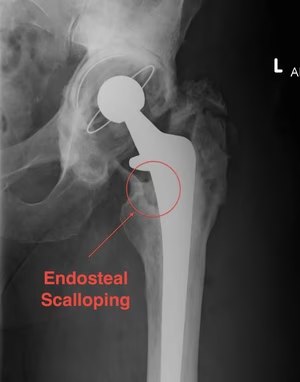
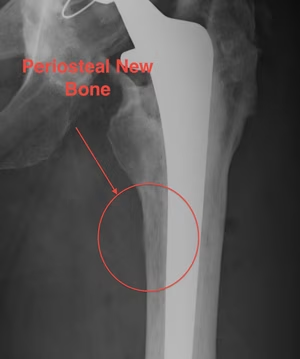
New radiolucent lines
Focal osteolysis with Endosteal scalloping
Periosteal new bone
- usually at junction meta / diaphysis on medial side
- almost pathognomonic
- rare
Loosening / subsidence
Blood tests
ESR > 30 - takes 6 to 12 months to normalize post surgery
CRP > 10 - takes 3 weeks to normalize post surgery
ESR < 30 and CRP < 10: 96% sensitive for excluding infection
www.boneschool.com/THA-infection-investigation
Bone scan
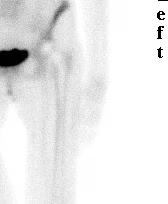
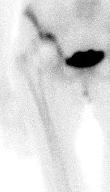
Positive bone scan
- positive up to one year post cemented THA
- positive up to two years post uncemented THA
- infection - increased uptake on all three phases
- loosening - increased uptake on delayed phase only
Negative bone scan
- reassuring for excluding infection / loosening
Aspiration
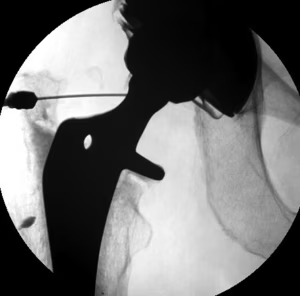
Local anesthetic injection
Crawford et al JBJS 1998
- 95-100% sensitivity
- ff good results from LA expect same from THR
- demonstrates that the pain is from the hip
Thigh pain post uncemented femoral component
Clinical
Dull aching pain
- mid femur
- located of tip of femoral stem
Incidence
Unclear
Etiology
Micromotion - failed bony ingrowth
Mismatch modulus of elasticity
- low bone stiffness and high implant stiffness (worse with cobalt versus titanium stems)
- increased stiffness with larger femoral stems
- osteoporotic bone in elderly patients
Management options
Cortical strut grafts and cerclage wiring
Stem revision