
Definition
Rare upper limb malformation
- embryological failure of separation of cartilaginous rods that form radius and ulna
- fibrous or bony synostosis
- limited forearm rotation
Epidemiology
Bilateral 60%
Family history / autosomal dominant 20%
Clinical
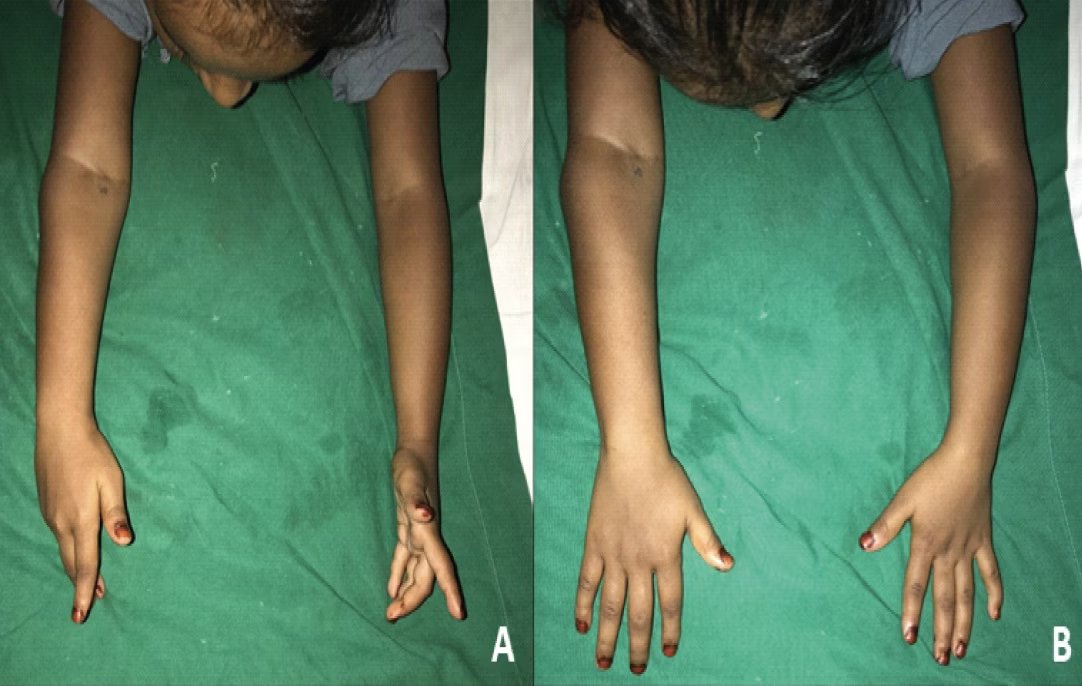
From: Mehta et al J Orthop Case Rep 2023
Forearm in varying degrees of pronation
Usually compensate with shoulder movement
Difficulties with ADL's with severe, fixed pronation
Xray
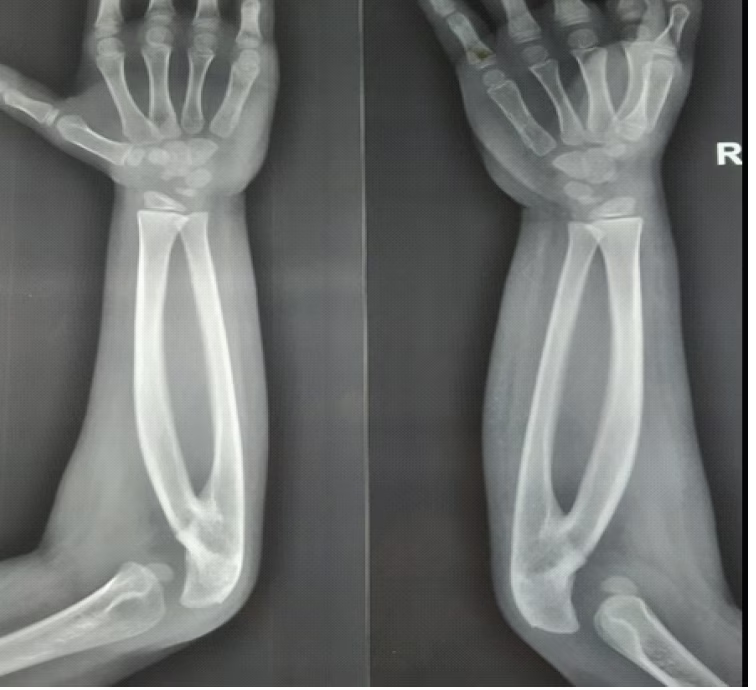
From: Mehta et al J Orthop Case Rep 2023
Synostosis between radius and ulna
Radial head may be dislocated
Operative management
Indication
Fixed pronation > 60 degrees
Bilateral
Options
Synostosis resection and graft interposition
Forearm derotation osteotomy
- systematic review of surgery for 550 congenital radioulna synostosis
- simple synostosis failed because of recurrence
- improved outcomes with synostosis resection and interposition vascularized fat grafts
- derotation osteotomy associated with improved functional outcomes
- 11% complications
Forearm derotation osteotomy
Aim
Provide forearm supination on one side
Changes position but not functional ROM
Technique
Age 3 - 6
Osteotomy radius and ulna
- aim for neutral forearm position
- fixation with k wires / TENS / plates / external fixation
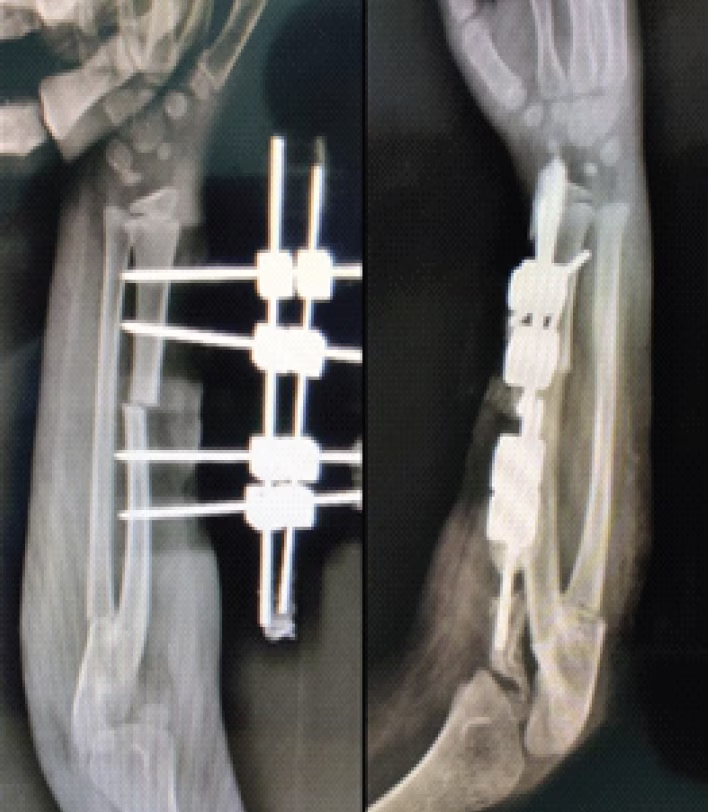
From: Mehta et al J Orthop Case Rep 2023
Results
Zarantarello et al J Child Orthop 2025
- 66 forearms undergoing proximal osteotomy
- neutral forearm position achieved in 61%
- complications 9%
Complications
Compartment syndrome
Nerve palsy
Recurrence
- systematic review of surgery for 550 congenital radioulna synostosis
- 11% complications
- 4% nerve palsy
- 3% recurrence
- 1% vascular compromise
- 1% infection
- 1% compartment syndrome