
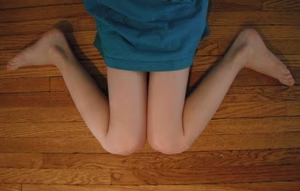
Definition
Version - normal rotation
Torsion - rotation 2 SD < or > mean
Femoral Version - angular difference between transcervical & the transcondylar axis
Tibial Version - angular difference between transcondylar axis of knee & transmalleolar axis
Natural History
In-toeing toddlers become out-toeing adults
Femoral anteversion decreases with age - 40° neonate / 15° adult
Tibial external rotation increases with age - 5° neonate / 15° adult
Causes
| In-toeing | Out-toeing |
|---|---|
|
Increased femoral anteversion Increased internal femoral torsion Increased tnternal tibial torsion Metatarsus adductus |
Physiological Hip / SUFE Increased external tibial torsion Pronation / Abduction of the feet
|
1st Year of Life - in-toeing usually metatarsus adductus
2nd Year of Life - in-toeing usually femoral anteversion
After 3rd Year of Life
- bilaterally intoeing FAV
- unilaterally intoeing ITT
- unilateraly outoeing ETT
Examination / Staheli's torsional profile (6)
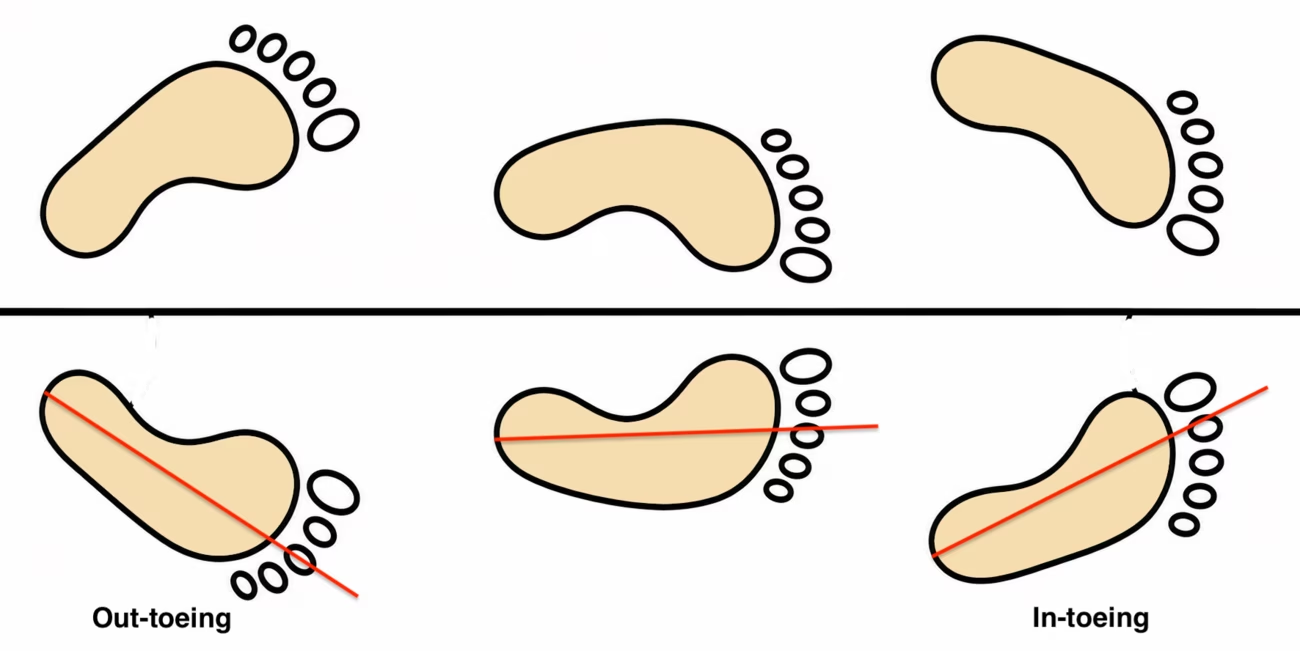
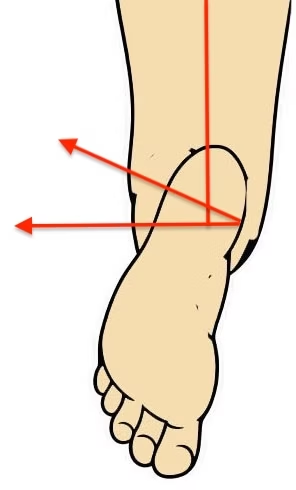
Foot progression angle / gait
- assessed on gait
- in-toeing or out-toeing
- usually 10° out (0°-30°)
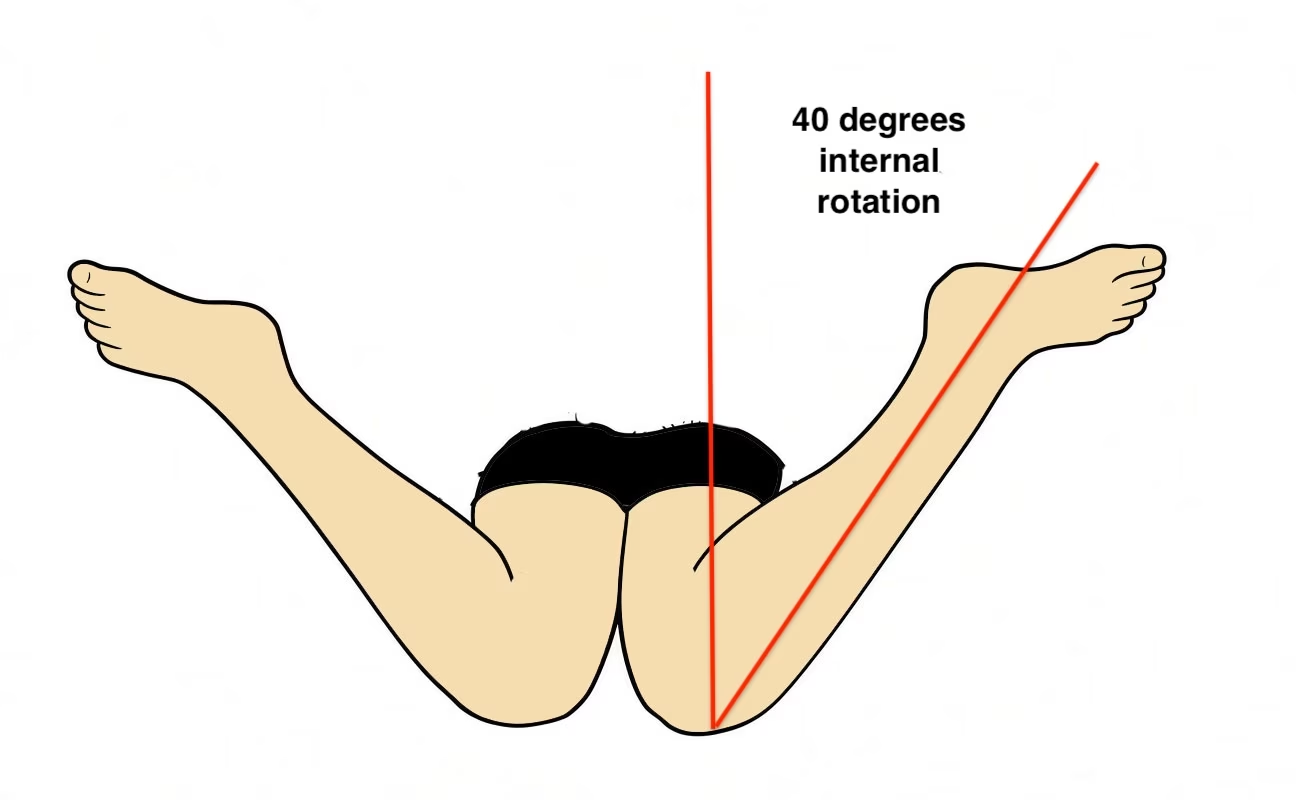
Hip internal rotation / hip external rotation
- child prone
- internal rotation + external rotation should equal 90°
- increased internal rotation > 40° / increased femoral anteversion
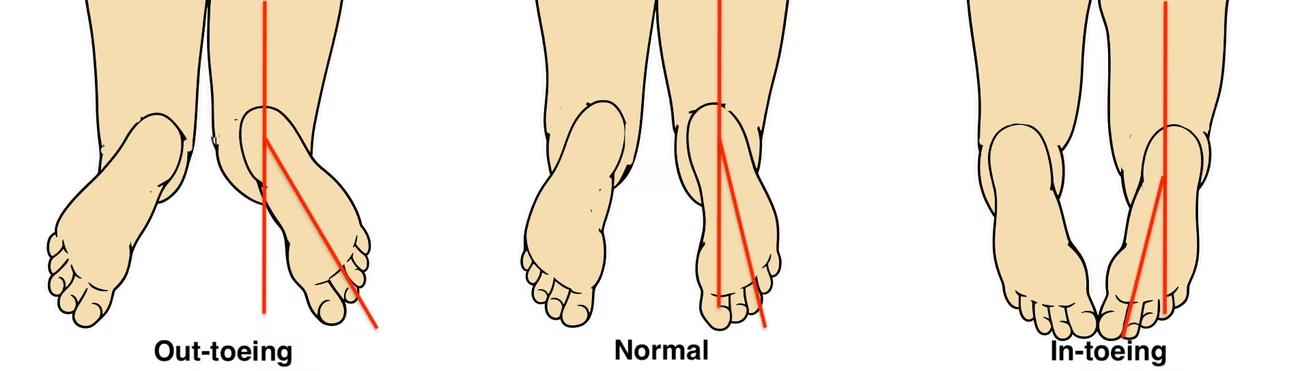
Thigh- Foot angle
- child prone & knees flexed
- angle between thigh and foot
- measures tibial torsion
- usually 15° (0°-30°) ER
Transmalleolar axis (TMA)
- usually 0 - 30° ER
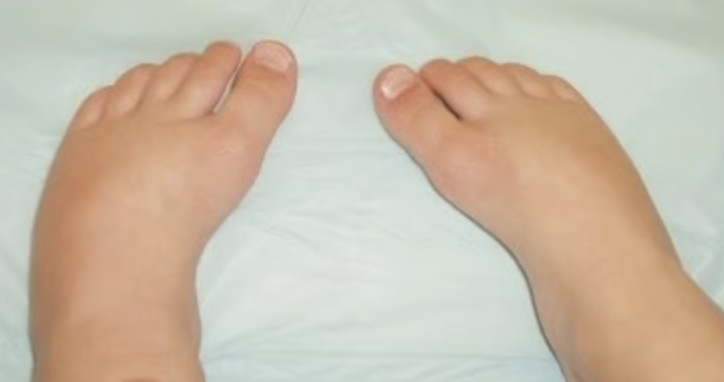
Shape of foot / metatarsus adductus
Measures of femoral version
CT / MRI
Management
1. Trying to control the sleeping, walking, or sitting of infants & children is impossible
2. Splints are of no benefit & interfere with child
3 Observational Management successful >99%, only 1 in 1000 need OT
4. OT correction effective but carries significant risk
5. OT only justified in the child with severe deformity that has failed to resolve with time
- ITT < -10°
- ETT > 40°
- FAV > 50°
6. At least > 8 years old prior OT
Increased proximal femoral anteversion
Issue
May be associated with patella instability
Tends to decrease over time
Indication
Proximal femoral anteversion > 50°
Technique
Subtrochanteric derotation osteotomy
Excessive external tibial torsion
Issue
May be associated with patella instability
Seen in spina bifida / cerebral palsy
Indication
PFJ instability
Thigh foot angle > 40°
Miserable malalignment syndrome
Increased femoral anteversion + excessive external tibial torsion
Increased internal tibial torsion
Natural history
Most cases resolve by 2 years of age
Few resolve > 8 years
Association with metatarsus adductus
Indication
Transmalleolar axis > 40°
Clumsiness
Technique
Supramalleolar osteotomy