
PRP
Greater trochanter pain syndrome
Greater trochanteric pain syndrome
Definition
Chronic lateral trochanteric pain
- abductor tendon tendonitis
- trochanteric bursitis
Epidemiology
Women 40 - 60 years old
Mechanism
? repetitive friction of iliotibial tract over GT
Symptoms
Pain over upper lateral thigh with activity
- often related to hip flexion
Full thickness tears
Surgical Options
1. Open antero-lateral approach
Large / Massive Cuff Tear
2. Deltopectoral approach
Large Subscapularis tear
3. Arthroscopic Assisted Mini-open
Indication
- Small / Moderate Cuff Tear < 3cm
- no retraction
Technique
- arthroscopic SAD
Partial thickness tears
Clinical
Pain & Stiffness
- often more pain than FT tears
Bursal side tears more painful than articular
Articular side more common
May see in young patient overhead throwing
Examination
Painful arc
Impingement signs
No weakness
- function good
De Quervain syndrome
Definition
Stenosing tenosynovitis of the first dorsal compartment of wrist
Epidemiology
Most are middle aged women
Aetiology
Repetitive thumb movements
- abduction & extension
- combined with RD & UD movements
Any mechanical irritation
- foreign body
- prominent bony surface
- restricted fascial compartment
Background
Definition
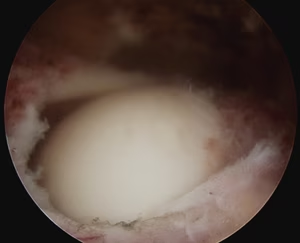
Full thickness tear (FTT)
- variable amount retraction from insertion
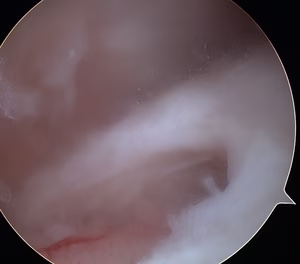
Partial thickness tear (PTT)
- incomplete
- bursal or articular sided
Adhesive capsulitis
Definition
Idiopathic inflammatory condition
- characterised by progressive shoulder pain & stiffness
- due to contracture of capsuloligamentous structures
- spontaneously resolves
Epidemiology
2% incidence
- 40 - 60 years
- Women 2:1
Sedentary workers
- Non-dominant limb
Bilateral in 10 - 40%
Aetiology
Lateral epicondylitis
Incidence
Lateral : Medial 9:1
Epidemiology
4th & 5th decades
- M = F
- 75% dominant arm
50% of regular tennis players
- especially > 2 hrs / week
Aetiology
Insertion pathology / Enthesopathy
Over-extension of the elbow with supination / pronation
Anatomy
Lateral epicondyle
- anconeus from posterior face
- ECRB and EDC from anterior face (CEO)