
causes
Patella Baja
Patella Baja
Aetiology
Congenital
Acquired
- trauma
- post ACL reconstruction / TKR
- chronic quadriceps rupture
Issues
Decreases ROM
Associated with early OA of the PFJ
Diagnosis
Blackburne-Peel ratio at 30 degrees flexion
Whiplash
Definition
Isolated posterior ligament injuries
- PLL / Posterior interspinous ligament / Paraspinal muscles
Excludes fracture / dislocation / HNP
Aetiology
MVA
Sport
Hyperflexion injuries
Symptoms
Large spectrum clinical presentation
- neck ache
- nausea & vomiting
- headache
- visual symptoms
Non Union
Definition
Non-union
- arrest of progression to union at fracture site
- > 6-9 /12
- no visible progressive signs of healing for at least three consecutive months
- individualise for each fracture
- when the surgeon believes the fracture has little or no chance to heal
Delayed union
- failure of fracture to unite within expected time
- still may spontaneously unite
Burners & Stingers
Definition
Neurological pain in arm after injury in sport
- usually due to brachial plexus injury
Epidemiology
Contact sports
- ice hockey
- rugby
- american football
- basketball
Pathology
Brachial plexus injury
Cervical nerve root injury
Aetiology
Traction injury
- hit onto shoulder
Instability
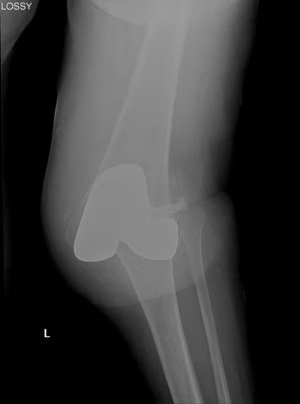
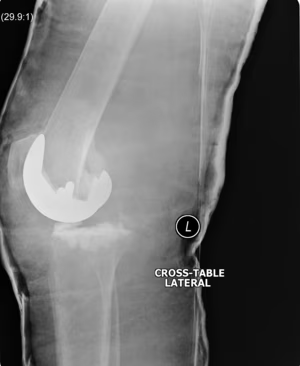
Types of Instability
1. AP Instability
2. Varus Valgus Instability
3. Global Instability
4. Frank Dislocation
Background
Definition
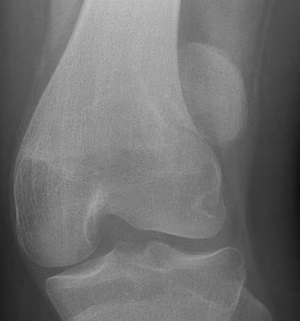
Repeated dislocation of patella with minimal trauma
- 15-20% of paediatric acute patella dislocations
- more common girls
- often bilateral
Dislocation occurs unexpectedly when quadriceps contracted with knee in flexion
Direction
Assessment bone loss
Indications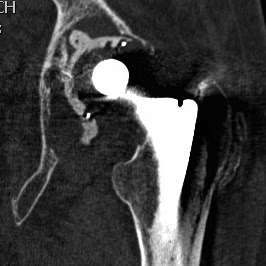
1. Loosening
2. Infection
3. Instability
4. Periprosthetic fracture
External snapping hip
Causes
Most common
- fascia lata on greater trochanter
- iliopsoas on lesser trochanter
1. Intra-articular structures
- labrum
- ligamentum Teres
- loose bodies
- synovial chondromatosis
- osteochondoma
2. Extra-articular structures
- fascia lata on greater trochanter (common)