
Definition
Lateral curvature of the spine secondary to vertebral anomaly
Epidemiology
10% of scoliosis
1/1000
5% inheritance risk
Classification
International Spine Society / MacEwen
A: Failure formation
B: Failure segmentation
C: Mixed
D: Complex unclassifiable
Failure segmentation
| Fully segmented | Semi-segmented | Non segmented |
|---|---|---|
|
Open disc above and below Greatest growth disturbance |
One open growth plate above or below |
No disc above or below Minimal growth disturbance |
 |
 |
 |
Failure formation
| Block vertebra | Unilateral bar | Unilateral bar and hemivertebra |
|---|---|---|
 |
 |
 |
Most common
- unilateral bar
- fully segmented hemivertebra
- semi segmented hemivertebra
Prognostic Features
70% will progress and need surgical intervention
| HIgh risk / 10° / year | Intermediate 5˚/ year | Low 2˚/ year |
|---|---|---|
|
Unilateral unsegmented bar + fully segmented contralateral hemivertebra |
Unilateral unsegmented bar Fully segmented hemivertebra Semisegmented hemivertebra Consecutive hemivertebra
|
Block vertebra Non segmented / incarcerated hemivertebra Wedge vertebra |
Associations
Cardiac - ASD, VSD, PDA, Tetralogy Fallot / all patients have echo prior to surgery
Renal - obstructions, abnormal kidney / all should have renal ultrasound and urological consultation
Klippel-Feil syndrome
VECTRAL syndrome
- Vertebral, Endocrine, Cardiac, Tracheo-eosophageal fistula, Renal / Radial club hand / Anus imperforate / Limb (Sprengel /CTEV)
Spinal dysraphism
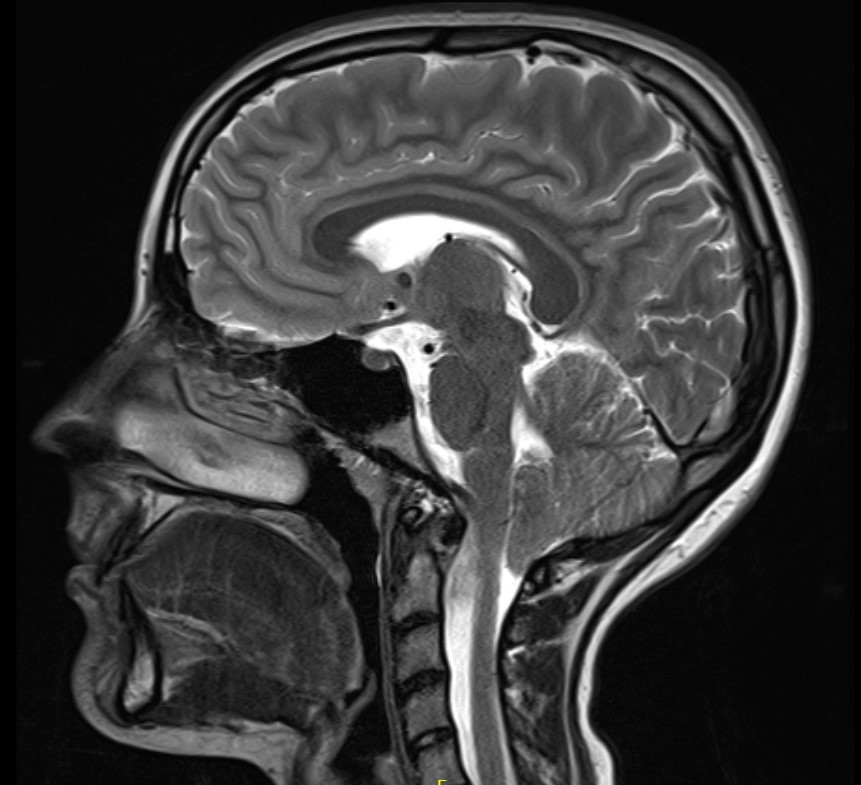
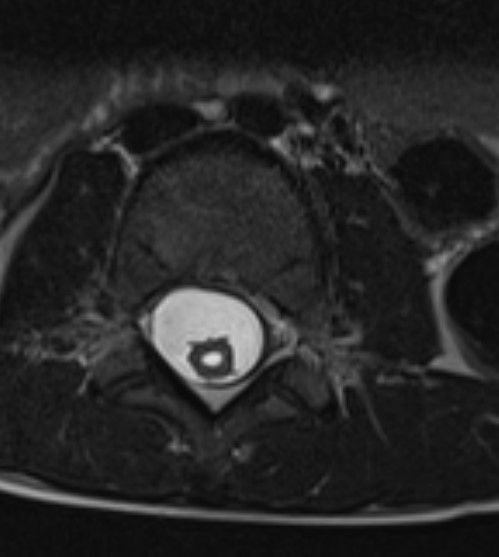
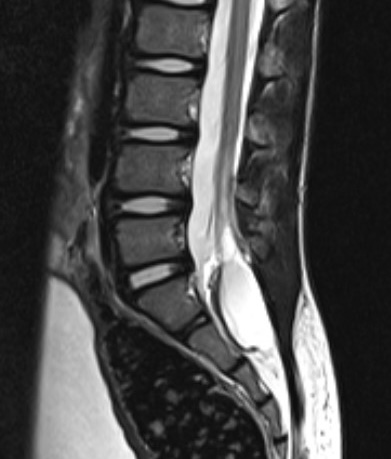
- diastematomyelia , syrinx, tethered cord, Arnold Chiari malformation
- all should have MRI especially presurgery
| Chiari malformation | Syrinx | Cord tethering |
|---|---|---|
 |
 |
 |
Xray
Lesion often difficult to interpret


3D CT
Nonoperative management
Bracing
Ineffective
Curves are rigid and non correctable
Operative management
Indications
Progressive > 4-6o per year
Curves > 40°
High risk i.e. unilateral unsegmented bar
Options
Convex hemi-epiphysiodesis
Hemivertebra resection
Hemivertebra resection and fusion
Rib distraction
Posterior fusion - usually at skeletal maturity to prevent crankshaft phenomenon
Convex hemi-epiphysiodesis
Remove disc and fuse convex side of curve
- allow for growth and correction from concave side of curve
- need sufficient growth (age < 6), fully segmented hemivertebra and smaller curves
- can be unpredictable in results
Results
Rizkallah et al Global Spine J 2020
- convex hemi-epiphysiodesis in 22 children mean age 3 and mean Cobb angle 40°
- mean curve reduction 40 to 27°
- better correction with mean age at surgery < 3
Hemivertebra resection and fusion
Indication
Risk damage to thoracic spine cord secondary to manipulation
- indicated for isolated hemivertebra in lumbar spine
Issues with ongoing anterior growth / crankshaft effect
- consider anterior fusion to prevent
- can also limit lung growth
Results
Guo et al J Orthop Surg Res 2016
- posterior hemivertebra resection in 39 patients mean age 4
- scoliosis improved from mean 38° to mean 6°
- no neurological complications
- 3 hardware issues
Peng et al J Ortho Surg Res 2025
- hemivertebra resection and fusion in 42 congenital
- crankshaft phenomenon 36%


From: Guo et al J Orthop Surg Res 2016
Rib distraction with VEPTR (vertical expandable prosthetic titanium rib)


Indication
Multiple rib fusions associated with vertebral anomaly
- risk thoracic insufficiency syndrome
- thoracotomy and insertion of vertical expandable prosthetic titanium rib (VEPTR)
- typically between 2nd and 3rd rib and to final rib / lumbar vertebra / pelvis
- distraction period every six months
- high rate of complications
Results
Waldhausen et al J Pediatr Surg 2016
- 65 patients treated with VEPTR
- 34% had complications, mainly infection and implant erosion