

Defect
Inheritable disorder of type I collagen
- fractures
- bone deformity
- short stature
- ligamentous laxity
85% autosomal dominant mutation in genes COL1A1 or COL1A2
- amino acid substitution
- prevents triple helix formation
Sillence Classification
Now 22 different types / classifications
|
Type I Non deforming / blue sclera |
Type II Perinatal lethal |
Type III Progressively deforming |
Type IV Common variable Normal sclera |
|---|---|---|---|
|
Most common but mildest |
Fatal after birth |
Severe but survivable |
Mild to moderate
|
|
Autosomal dominant Blue sclera |
Autosomal recessive Blue sclera |
Autosomal recessive White sclera |
Autosomal dominant White sclera
|
|
Mildest - blue sclera - near normal height - risk of fracture decreases after puberty
|
At birth - multiple fractures - deformed long bones - death from respiratory failure |
Frequent fractures Multiple deformities Short stature |
Mild to moderate deformity Bowing long bones |
Differential diagnosis
Non accidental injury - metaphyseal fractures not common in OI
Rickets - bowing
Diagnosis
Skin biopsy and DNA sequencing
Skeletal manifestations
Frequent multilevel fractures of femur / tibia / forearm with limb deformity / bowing
- US database study of 5000 OI patients
- average 1 fracture per year
- increased pain presentation in OI cohort compared to non OI cohort


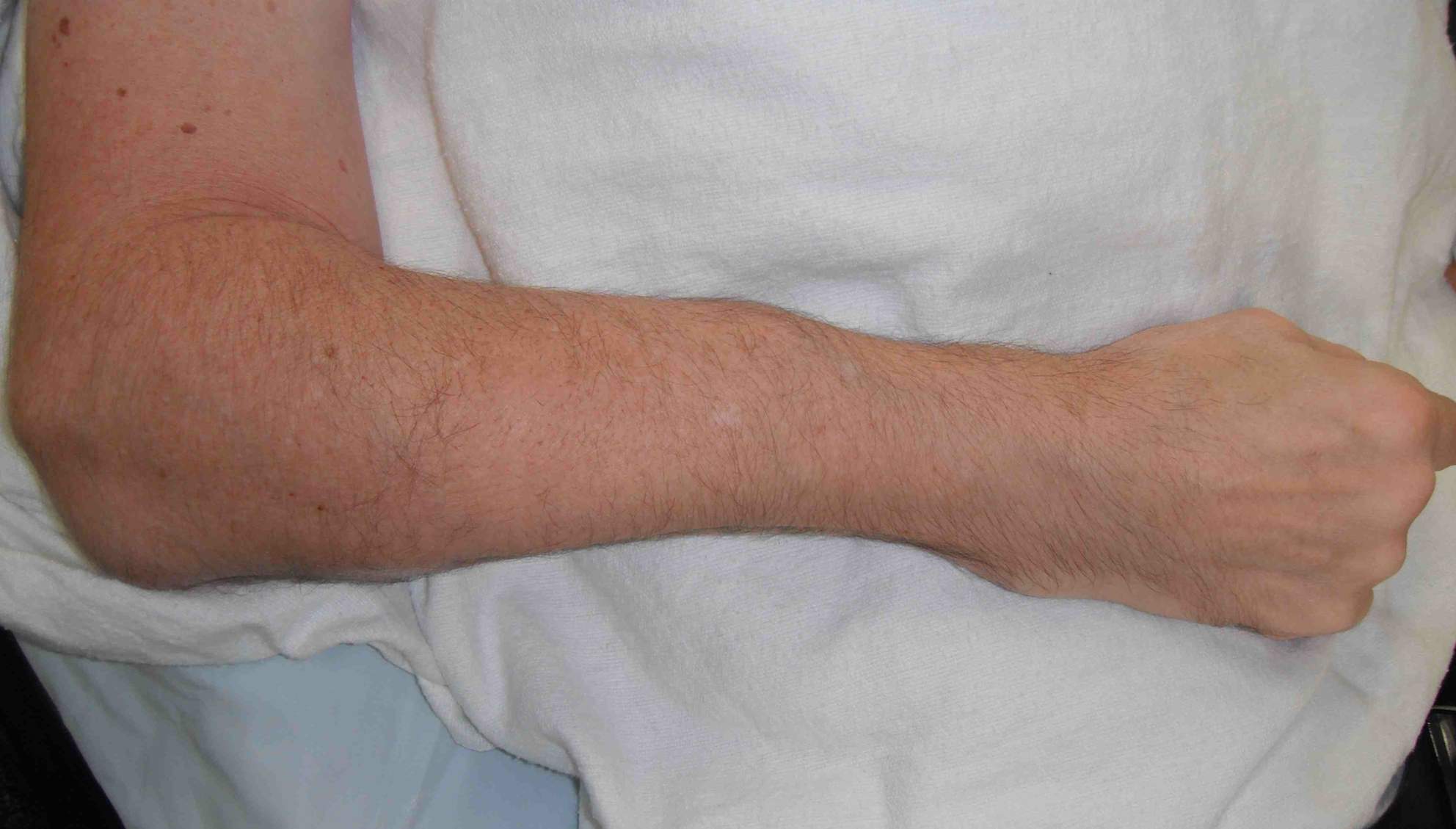
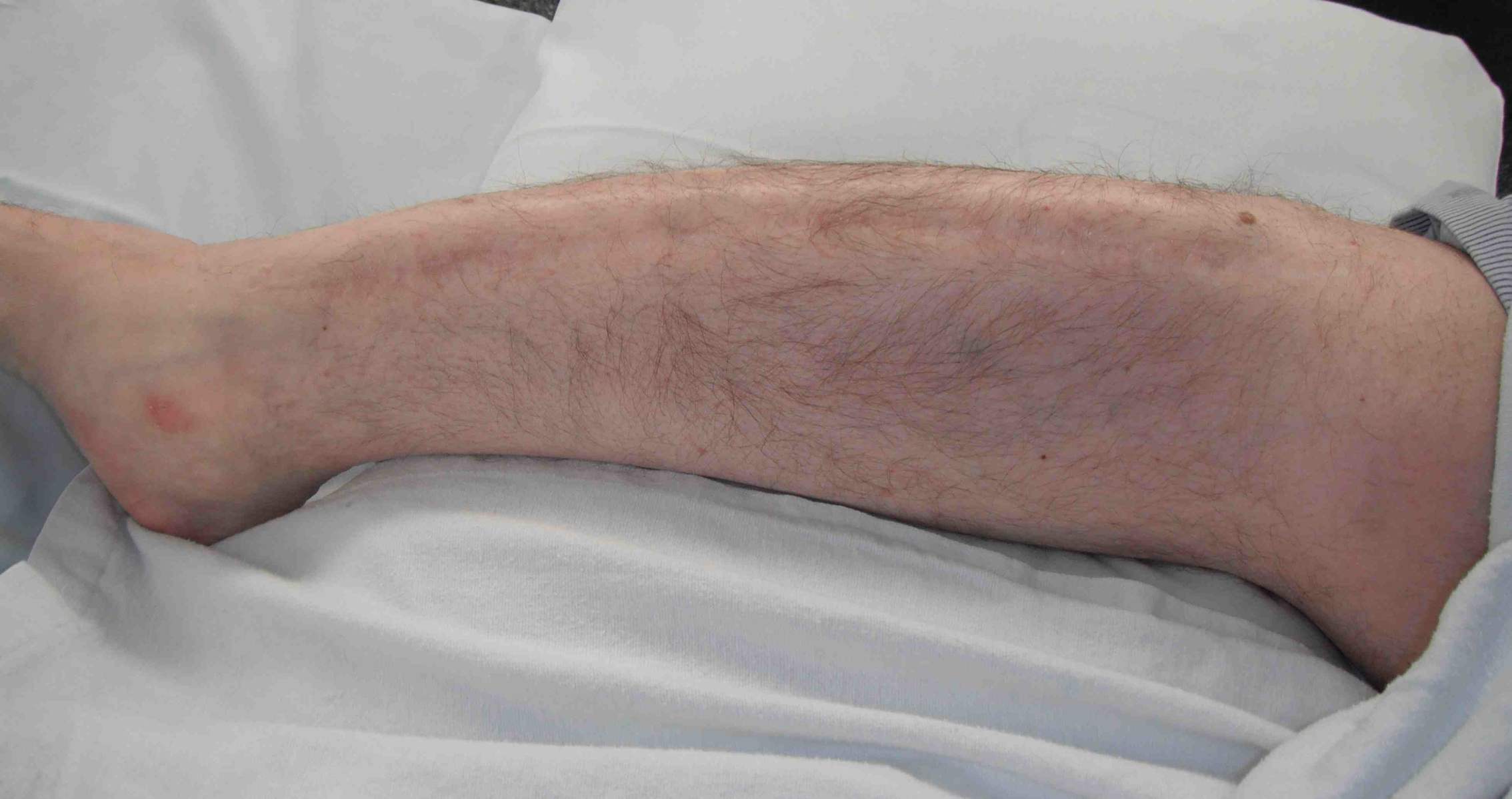
Bowed forearm and tibia
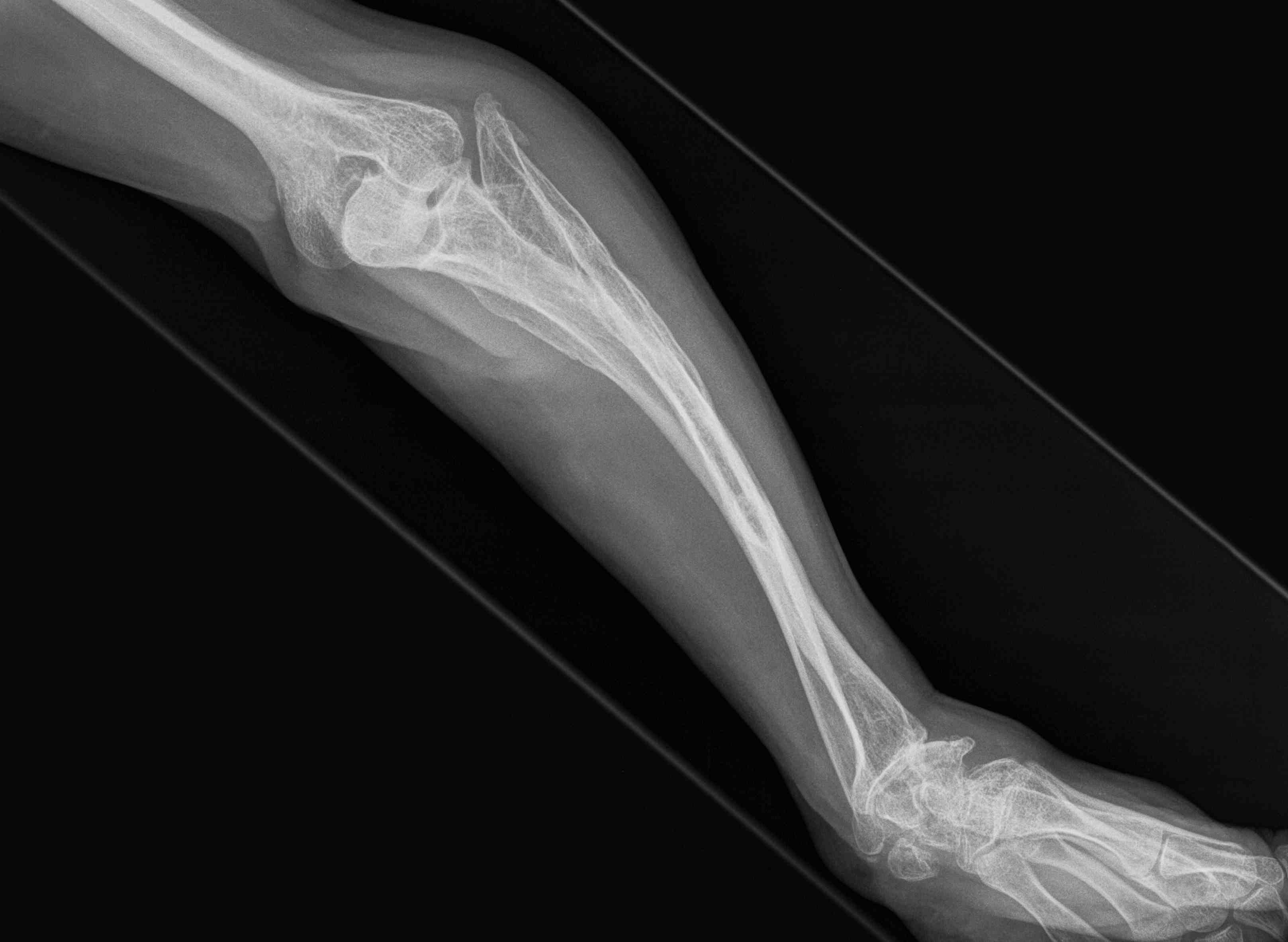
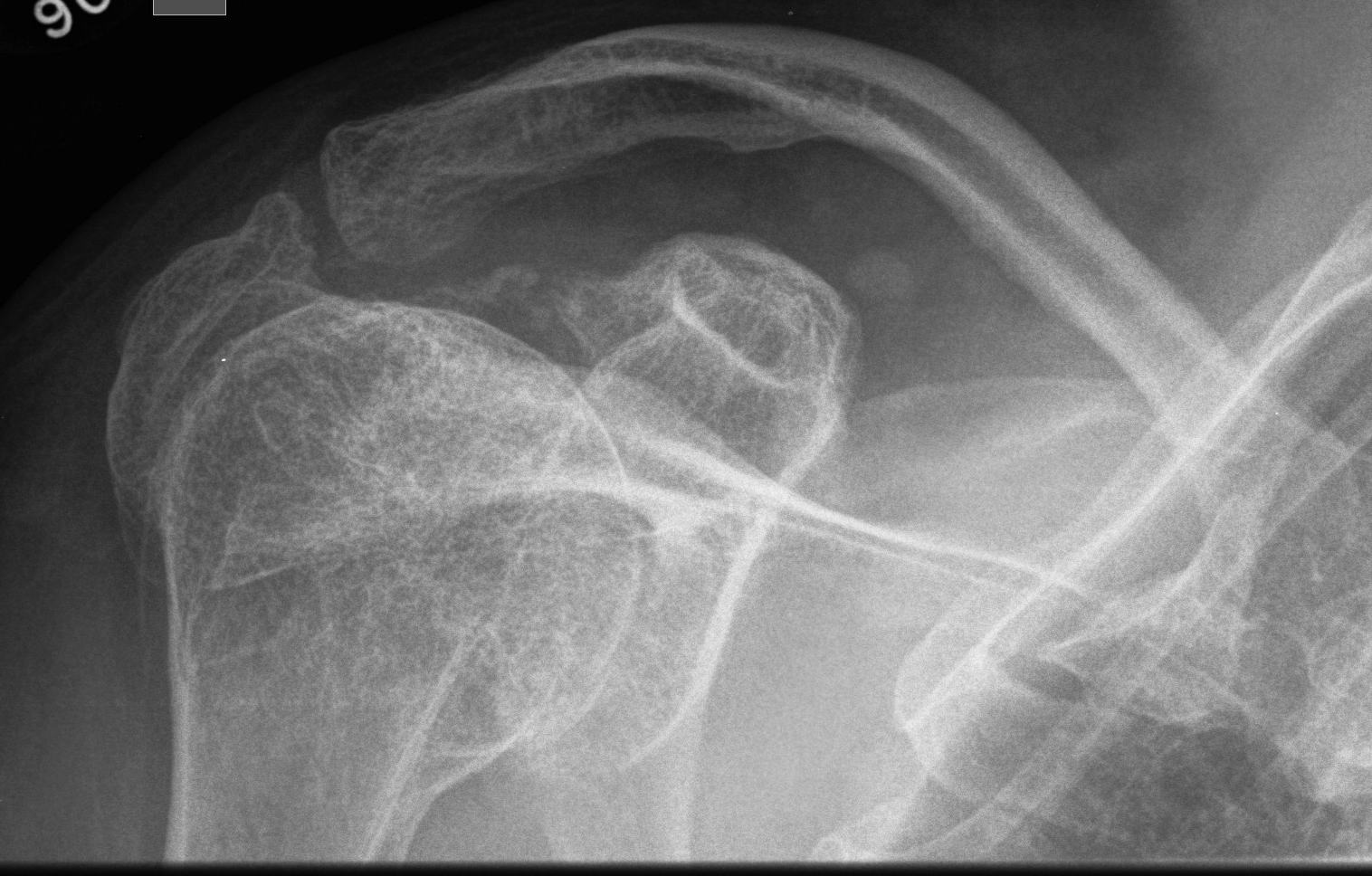
Bowed forearm and clavicle
Hip coxa vara

Kyphoscoliosis
Basilar invagination


Extraskeletal manifestations
Blue sclera secondary to collagen defect and translucent sclera
Dentinogenesia imperfecta - teeth appear brownish or bluish and are soft, translucent and prone to cavities
Hearing problems - defect hearing bones
Fragile skin and fragile capillaries
Valvular Disease - mitral prolapse and aortic regurgitation
Nonoperative management
Options
Bisphosphonates
Growth hormone - early stages of researdh
Teriparatide / synthetic parathyroid hormone - risk of osteosarcoma in young patients
Stem cell transplant - early results not promising
Gene therapy - lab studies ongoing
Bisphosphonates
Results
- RCT of oral bisphosphonate versus placebo in children with OI
- 147 patients
- bisphosphonate increased BMD and decreased fracture rate
Hald et al J Bone Mineral Res 2015
- meta-analysis of 6 placebo controlled RCT of bisphosphonates in OI
- bisphosphonates increase BMD, but may not affect fracture rate
Issues
Need period off medications / drug holiday
Decrease union of osteotomy but not fracture
Jaw osteonecrosis - no reported cases in children
Bone sclerosis - unknown significance


Bone sclerosis associated with long term bisphosphonates
Operative Management
Multilevel osteotomy with telescoping intramedullary rods
Indication
Fracture / recurrent fractures
Deformity / bowing
Telescoping rods concept
Lock in epiphysis top and bottom
- Dubow-Bailey / Sheffield Rods - T piece
- Fassier-Duval Rods - epiphyseal portion is threaded
- male and female components / lengthen as the bone grows


Technique
Fassier-Duval surgical technique PDF
Surgical technique article PDF
Youtube surgical technique video
Vumedi surgical technique video


Telescoping versus static nails
Nguyen et al J Pediatr Orthop 2025
- 119 bones in 52 patients with OI
- telescoping v static nails
- longer survival and fewer revisions with telescoping nails
Revision / nonunion
Azzam et al J Pediatr Orthop 2018
- 58 patients with 178 elongating IM rods for realignment in OI
- 53% revision rate at mean 4 years after procedure
- nonunion 14%
Yong et al J Pediatr Orthop 2022
- meta-analyis of 500 elongating rods for fractures in OI
- lowest complication rate with Fassier-Duval rods
- complication rate 9% per year per rod
Anam et al J Bone Miner Research 2015
- 261 osteotomy and IM rodding in femur / tibia OI patients
- improved union rates with 4 months off bisphosphonates
- improved union rates with osteotomy using osteotome versus power saw
Complications
Failure of telescoping mechanism
Nonunion
- percutaneous osteotomy with osteotome not oscillating saw
- cease bisphosphonates for 4 months post surgery

From: Wallace et al J Pediatr Society North America 2026
Migration of eiphyseal fixation
- epiphyseal fixation center-center in distal tibia
- threads extend across apophysis in greater trochanter


Kyphoscoliosis


Causes
Vertebral fracture
Vertebral malformation
Ligamentous laxity
Incidence
- 316 patients with OI
- scoliosis present in 50%
- most severe with worst progression in Type III (incidence 68%, progression 6 degrees per year)
- bisphosphonates before age 6 delayed progression in Type III only
Sienko et al Spine Deformity 2023
- 2372 patients with OI
- 429/2372 (18%) diagnosis of scoliosis
- 74/2372 (3%) OI patients underwent scoliosis surgery
Options
Posterior spinal fusion
Growth friendly instrumentation
Outcomes
Sienko et al Spine Deformity 2023
- 74 OI patients underwent scoliosis surgery
- 8% revision
Lu et al Spinal Deformity 2026
- systematic review of scoliosis surgery in OI
- 14 studies and 300 patients
- 21% incidence of postoperative complications
- 6% revision surgery
- lower revision and complication rate with posterior stabilization versus growing instrumentation
Basilar invagination
Issue
Hydrocephalus / brain stem compression
Management
Decompression / occipito-cervical fusion