
Epidemiology
Usually 50-60 years old
Aetiology
Primary 90% of cases
Secondary
- AVN
- trauma
- instability
Pathology
Cuff & biceps intact as rule
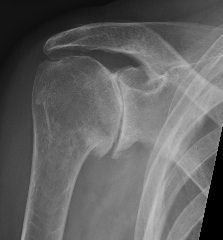
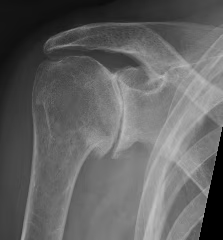
Inferior beard osteophytes

Retroversion of glenoid due to posterior wear
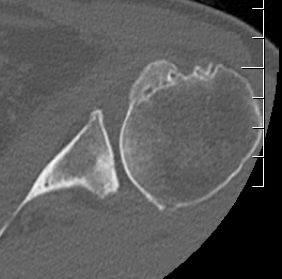
Posterior subluxation not uncommon
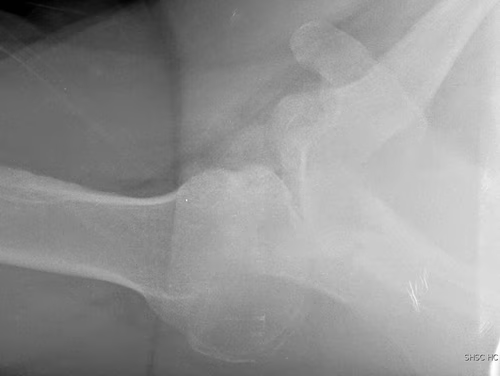
Tight anterior capsule & subscapularis limiting external rotation
Post traumatic
- always soft tissue contracture
- rotator interval contracted
- malunion of tuberosities leads to impingement and offset of normal cuff action
- non-union results in extensive shortening of cuff
- scarring about axillary nerve
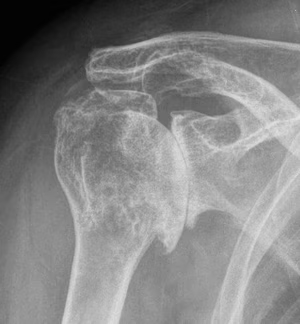
OA post fracture
Signs
Global painful restriction of range of movement
- due to incongruity of joint surfaces
- crepitus
- limitation of ER
DDx Limitation ER
Frozen Shoulder
Chronic posterior dislocation
Arthrodesis
X-ray
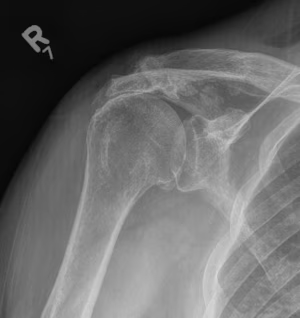
Typical changes of OA
1. Teardrop / beard osteophytes on inferior head & glenoid
2. Osteochondral loose bodies
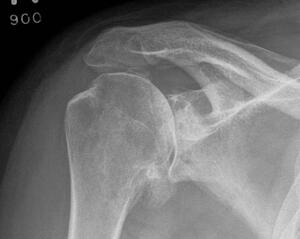
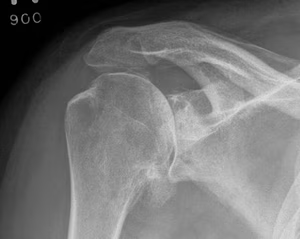
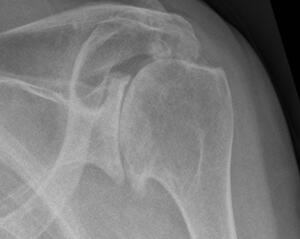
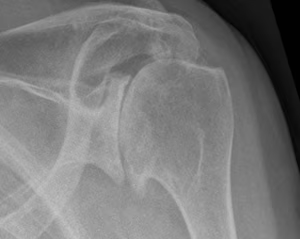
Beard osteophytes
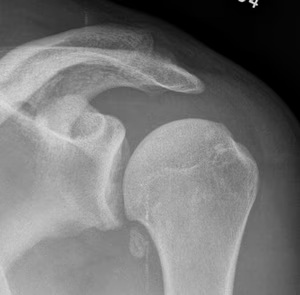
DDx
Cuff arthopathy
- proximal migration of head
- subacromial sclerosis
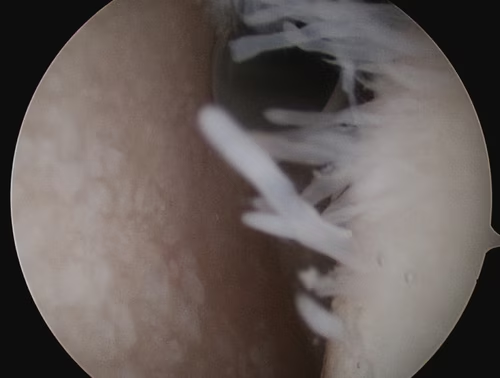
Arthroscopy
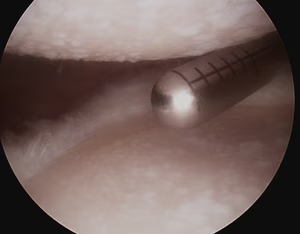
Management
Non-operative
ELMPOPI
Education
Lifestyle modification
Pharmaceuticals - simple analgesia
Physiotherapy
Injections
Injections
Hyaluronic Acid
Zhang et al. JSES 2019
- systematic review and meta-analysis
- no statistical difference in outcomes between HA and placebo
https://pubmed.ncbi.nlm.nih.gov/30502030/
Bone Marrow Aspirate
Dwyer et al. Arthros Sports Med Rehab 2021
- RCT cortisone versus bone marrow aspirate for shoulder OA
- 25 shoulders
- improved QuickDASH and EQ5D but not WOMAC at 12 months post injection
https://pubmed.ncbi.nlm.nih.gov/34712981/
Platelet rich plasma
Randomized trials on clinicaltrials.gov
None published yet
Operative
Options
Arthroscopic debridement
Glenoid resurfacing with glenoid biological resurfacing
Arthrodesis
Replacement
1. Arthroscopic Debridement
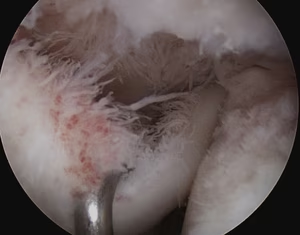
Technique
A. Glenohumeral joint
- deal with biceps tendon pathology if present (tenotomy / tenodesis)
- synovectomy
- capsular release
- chondroplasty
- remove beard osteophyte
B. Subacromial space
- acromioplasty
- CA ligament left intact
- ACJ resection
Results
Mitchell et al. AJSM 2016
- 49 shoulders mean age 52 at 5 year follow up
- 26% progressed to total shoulder at mean of 2.6 years
- otherwise significant improvements in clinical outcomes
https://pubmed.ncbi.nlm.nih.gov/27496907/
Arner et al. AJSM 2021
- 38 shoulders mean age 53 at 10 year follow up
- 63% 10 years survival
- humeral head flattening and severe joint incongruency risk factors for TSA
https://pubmed.ncbi.nlm.nih.gov/33175562/
2. Humeral head replacement with glenoid biological resurfacing
Meaike et al. Should Elbow 2020
- 11 studies, 268 shoulders
- revision rate 34%
- another 10% unsatisfactory
https://www.ncbi.nlm.nih.gov/pmc/articles/PMC6974882/
3. Arthrodesis
Indication
May be considered in very young active patient
Issues
Limited movement
Difficult to perform
4. Arthroplasty
Options
Hemiarthroplasty (young patient or insufficient glenoid bone stock)
TSR
Results
Australian Joint Registry 2021
- 8000 stemmed anatomic TSR
- 15% revision rate at 14 years