
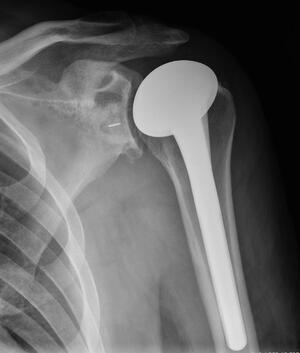

Indications
RA
OA
AVN
Contra-indications
Infection
Charcot
Paralysis of deltoid
Torn rotator cuff
Insufficient glenoid bone stock
Requirements
1. Functioning / Repairable rotator cuff
- maintain stability
- maintain centre of joint rotation
- early failure if cuff deficient
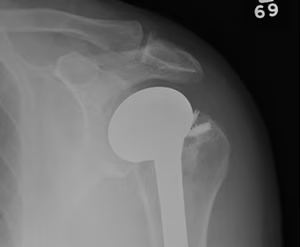
2. Intact Deltoid
3. Resonable glenoid bone stock
- commonly posterior bone loss in OA
- glenoid component must be completely supported by peripheral bone rim or early failure
- beware glenoid hypoplasia
Anatomy
Glenoid
Height
- 35 - 40 mm
Width
- approximately 70% glenoids are pear shaped
- remainder elliptical
- upper width average 23 mm
- lower width average 29 mm
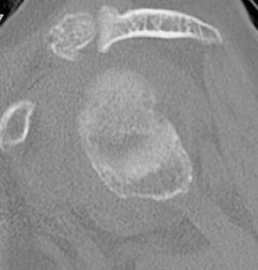
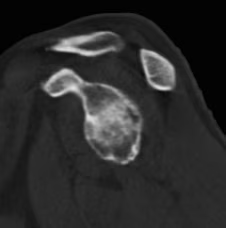
Inclination
- approximately 4 - 5o superior
Version
Healthy shoulders
- mean 2o anteversion
- large range
- 14o anteverted to 10o retroverted
Pathology
- RC 8o retroversion mean
- OA 15o retroversion mean
- RA 15o degrees retroversion mean
Vault
Usually triangular
Scapula
30o anteverted from coronal plane
Humeral head
Retroversion 30o
Design
Constraint
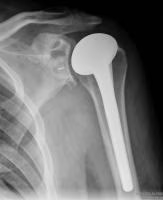
Highly
- never used
- high failure rates / peri-articular fracture
Semi Constrained
- cupped glenoid
Unconstrained
- GE > 90%
- most common design
Stem
- cemented v uncemented
- stems v resurfacing
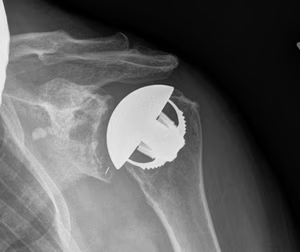
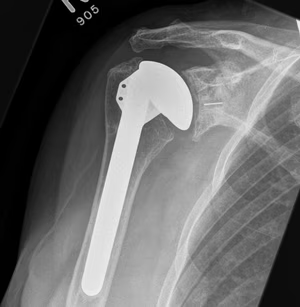
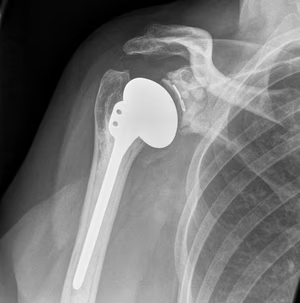
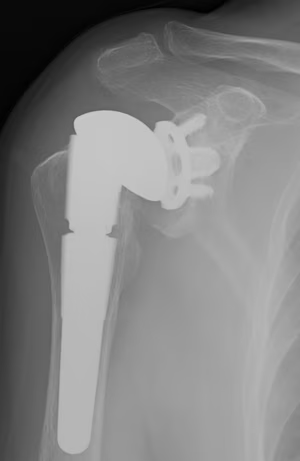
Glenoid
- metal backed
- all poly
Planning
AP XR IR & ER
- Assess head
Axillary
- Assess glenoid
- OA = Posterior bone loss
- RA = Medial bone loss / protrusio
Template
1. Stem
- size
2. Head
- neck osteotomy
- head diameter and depth
3. Glenoid size
CT
1. Assess bone stock
- sufficent bone in glenoid
- exclude glenoid hypoplasia
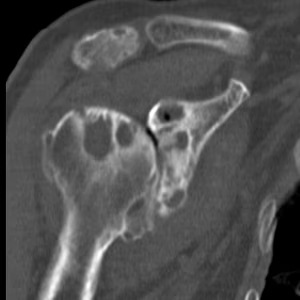


2. Assess version / posterior deficiency
Measurement
- can be suprisingly inaccurate
Hoenecke JBJS 2010
- 2D CT depends on angle CT gantry
- 20% error > 10o
- 3D CT best
Normal
- average is 2o anteversion
- up to 15o retroversion can be normal
Options for Management Glenoid Version
A. Neutral inclination glenoid
- reduce retroversion of head to 25o

B. 0 - 10o retroversion of glenoid
Plan
- alter with reaming / 10o change is the maximum
- otherwise can run into difficulty seating glenoid
- reduce retroversion of head further

C. 20o + retroversion of glenoid / deficiency
Options
- alter up to 100 with reaming
- reduce further the retroversion of head
- glenoid bone augments / augmented poly
- may require primary glenoid osteotomy


Assess Rotator Cuff
MRI
Ultrasound
Rehabilitation
Neer's 3 Phase shoulder rehabilitation
Phase 1 Passive motion in forward flexion & ER
Phase 2 Active Assisted 6-8 weeks
Phase 3 Advanced muscle strengthening 3/12
Results
1. Pain
Pain relief good 90%
2. ROM
Range of motion variable
- OA with intact cuff = 120° elevation
- Post fracture or huge cuff tear = 40°
ROM gain
- OA 77o
- RA 57o
- post trauma 33o
3. Survival
Deshmuhk et al J Shoulder Elbow Surg 2005
- 93% survivorship 10 years
- 88% 15 years
- average age 60 years
- mostly Neer II prosthesis
Sperling et al J Shoulder Elbow Surg 2004
- patients under 50 having TSR (Neer II)
- 97% 10 years, 84% 20 years
Complications
1. Subscapularis Failure
Causes
- poor reattachment
- overstuffing anteriorly
- humeral anteversion
- denervation
Prevention
- trial ER on table at end
- limit rehab to this
Consequences
- decreased ROM
- pain
- instability
Salvage
1. Re-repair - limited success
2. Pectoralis major transfer
- results poor in shoulder arthroplasty
- Jost et al JBJS Am 2003
3. Achilles tendon bone allograft
4. Bristow
5. Reverse
Loosening
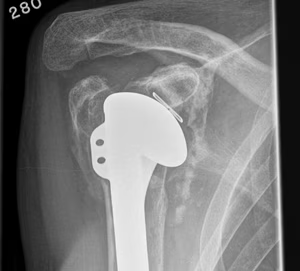

Rates
- 5-40%
- clinical loosening relatively infrequent
- uncemented > cemented
Glenoid lucent lines
- relatively common
- ~ 30-96%
- not all are associated with pain
- not all require revision
Humeral component
- loosening rare
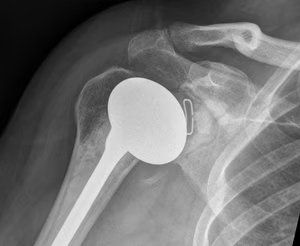
Instability 5%
Anterior
Cause
- mal-rotation humeral component most common
- subscapularis rupture
- anterior deltoid dysfunction
- glenoid component loosening
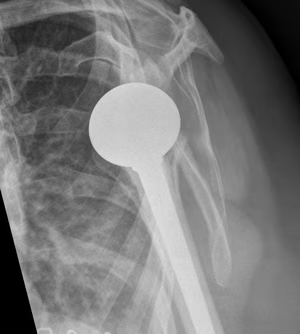
Superior
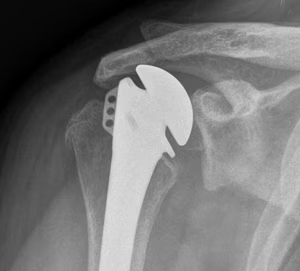
Cause
- attenuation cuff or frank rupture
- dynamic muscle dysfunction
Prevention
- must ensure don't leave humeral head proud
- restore shenton's line
- results in eccentric loading of glenoid component & loosening
- "rocking horse glenoid"
Posterior (most common problem)
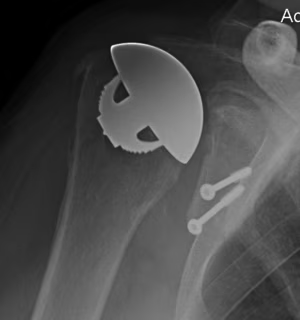
Cause
- excess retroversion of glenoid or humerus
- posterior glenoid erosion
- ST imbalance

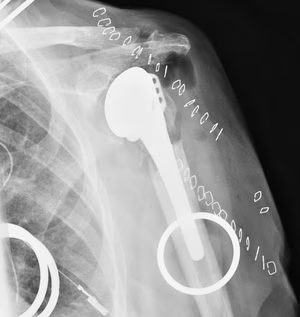
Management
- may need posterior approach to reduce
- allows posterior capsular plication
- alter component version / increase anteversion
- anterior releases
Inferior
- especially post fracture with shortening of humerus
- important to re-establish humeral length to restore resting tension of cuff & deltoid
- overstuffing of joint
Post-op rotator cuff failure
Rate
- 2%
Cause
- due to head malplacement or malposition
- respond poorly to reconstruction
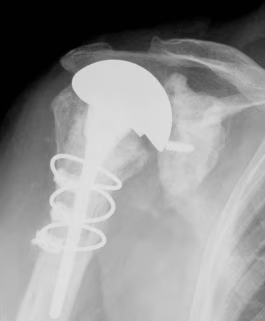
Management
- revise to reverse TSR
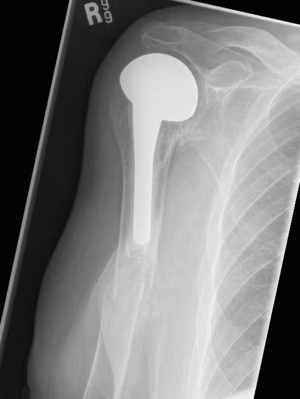
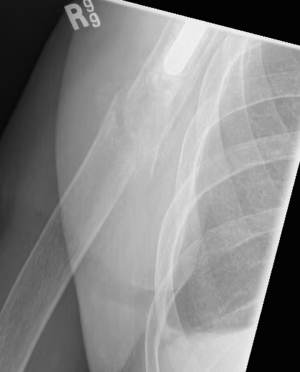
Peri-prosthetic Fracture
Type
A: Tip of prosthesis with proximal extension
B: Fracture at tip only
C: Fracture distal to tip and extends into distal metaphysis
Options Humeral Shaft Fracture
A. Non operative Management
- prothesis stable
- acceptable aligment
B. ORIF
- prothesis stable
- fracture distal to prosthesis
- anterolateral approach and plate
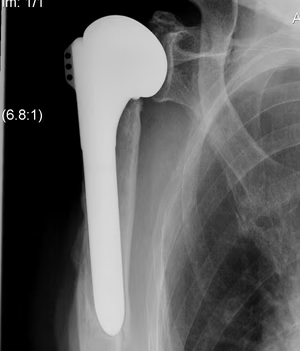
C. Revise to long stem > 2 cortical diameters past fracture
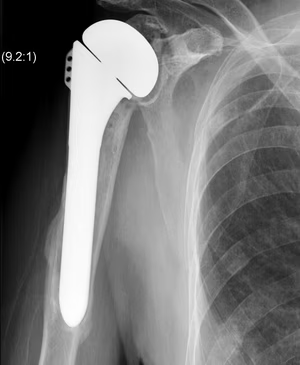
Results
Kumar et al JBJS Am 2004
- 16 patients
- 6 healed after 180 days of non operative treatment
- 5 required operation after 123 days non operative treatment
- recommended all fractures can be treated non operatively
- if well aligned and prosthesis stable
- if not united by 3 months, recommend intervention
Infection 1%
NV injury
AXN / MCN